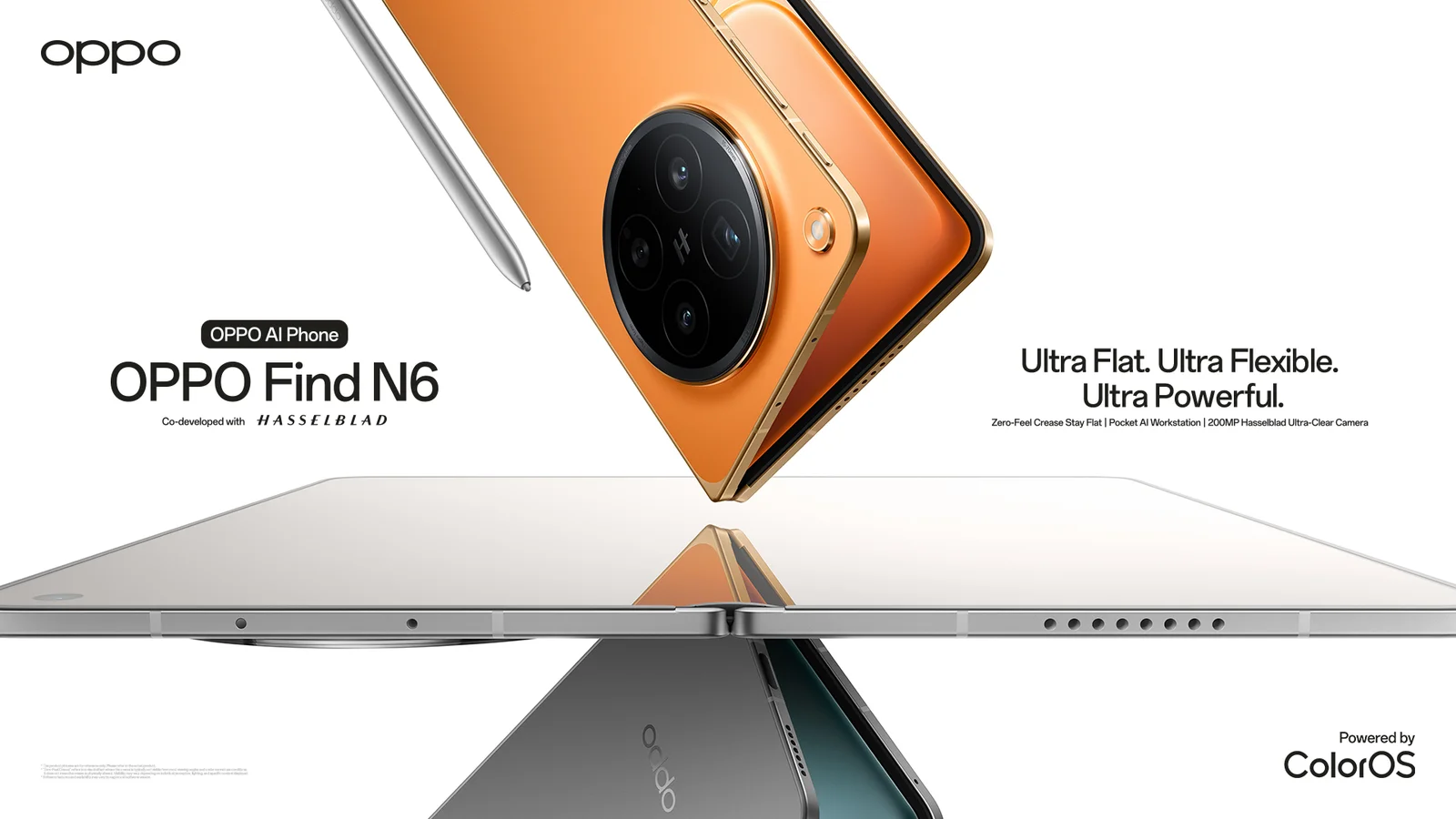
OPPO has introduced the Find N6 in the Philippines, expanding its premium foldable lineup with a device aimed at professionals and heavy multitaskers. Priced at PHP 139,999, the new foldable focuses on productivity, durability, and flagship performance rather than novelty design alone.
The device enters a competitive foldable market where brands are shifting from experimental form factors to productivity-first computing devices. OPPO’s pitch centers on long-term durability, improved multitasking, and high-end imaging backed by Hasselblad tuning.
Slim foldable design targets daily usability
The OPPO Find N6 continues the trend of thinner, lighter book-style foldables, measuring 8.93mm when folded and weighing 225 grams. OPPO positions it as a device that replaces both smartphone and tablet use cases without sacrificing portability.
Key design highlights include an ultra-slim 8.93mm folded profile, 225g lightweight build, narrow bezels for expanded screen immersion, and a book-style foldable form factor.
The design reflects a broader industry shift where foldables are being refined for everyday carry rather than niche use.


Snapdragon 8 Elite Gen 5 powers flagship performance
At its core, the OPPO Find N6 runs on the Qualcomm Snapdragon 8 Elite Gen 5 Mobile Platform, aligning it with the latest wave of high-performance Android flagships. OPPO is positioning the device for users who rely heavily on multitasking, video conferencing, and content creation.
The device also includes up to a 6000mAh silicon-carbon battery, optimized performance for multitasking and large apps, and support for sustained productivity workloads.
With these specifications, OPPO targets users who treat smartphones as primary work devices rather than secondary tools.
Foldable display focuses on durability and usability
The OPPO Find N6 places strong emphasis on durability upgrades through OPPO’s “Armour Shield Architecture,” which integrates reinforced materials and hinge protection.
Durability and display features include a 2nd-Gen Titanium Flexion Hinge, “Zero-Feel Crease” foldable display technology, IP56, IP58, and IP59 ratings, and certification for up to 1 million folds.
These improvements reflect ongoing pressure in the foldable segment, where OPPO and its competitors continue working to address long-term wear concerns, particularly crease visibility and hinge reliability.
Multitasking and cross-device workflow integration
Beyond hardware, OPPO is pushing software as a key differentiator. The Find N6 supports Free-Flow Window multitasking, allowing users to run multiple apps simultaneously on the larger internal display.
It also introduces Cross-Ecosystem Connect, enabling smoother file and workflow transfers between devices such as PCs and tablets. This positions the Find N6 closer to a mobile productivity hub than a traditional smartphone.
200MP Hasselblad camera system for professional use cases
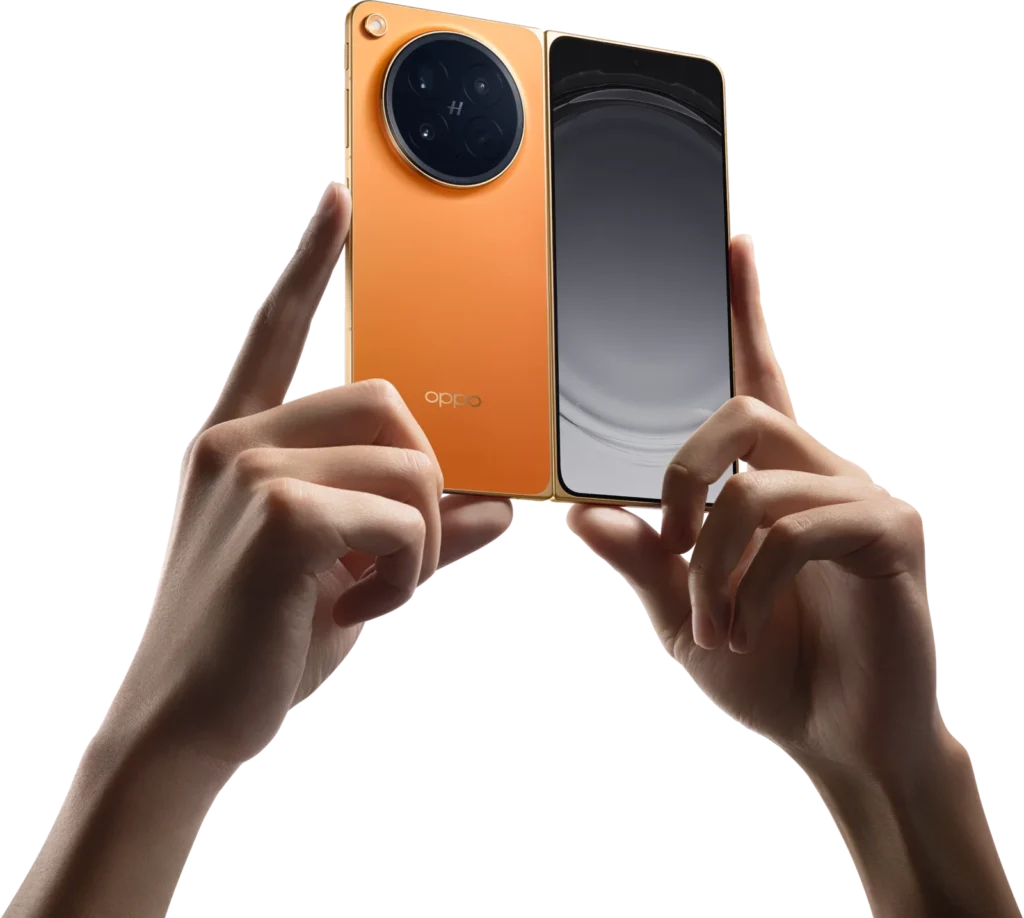
The OPPO Find N6 continues its partnership with Hasselblad, equipping the device with a 200MP main camera system supported by OPPO’s LUMO Image Engine. The focus is on producing consistent color accuracy and detail for both personal and professional use.
Camera highlights include a 200MP Hasselblad Ultra-Clear Camera, True Color imaging system, and optimized low-light and travel photography performance.
OPPO is targeting users who rely on smartphones for both content creation and professional documentation.
Foldables shift further into productivity-first devices
The OPPO Find N6 reflects a broader industry transition where foldables are no longer positioned as experimental devices but as productivity-centric flagship tools. With improved durability, high-end silicon, and multitasking software, OPPO is aligning its strategy with enterprise users and mobile professionals.
At PHP 139,999, the Find N6 competes directly in the premium foldable segment, where differentiation increasingly depends on software integration and long-term usability rather than hardware innovation alone.