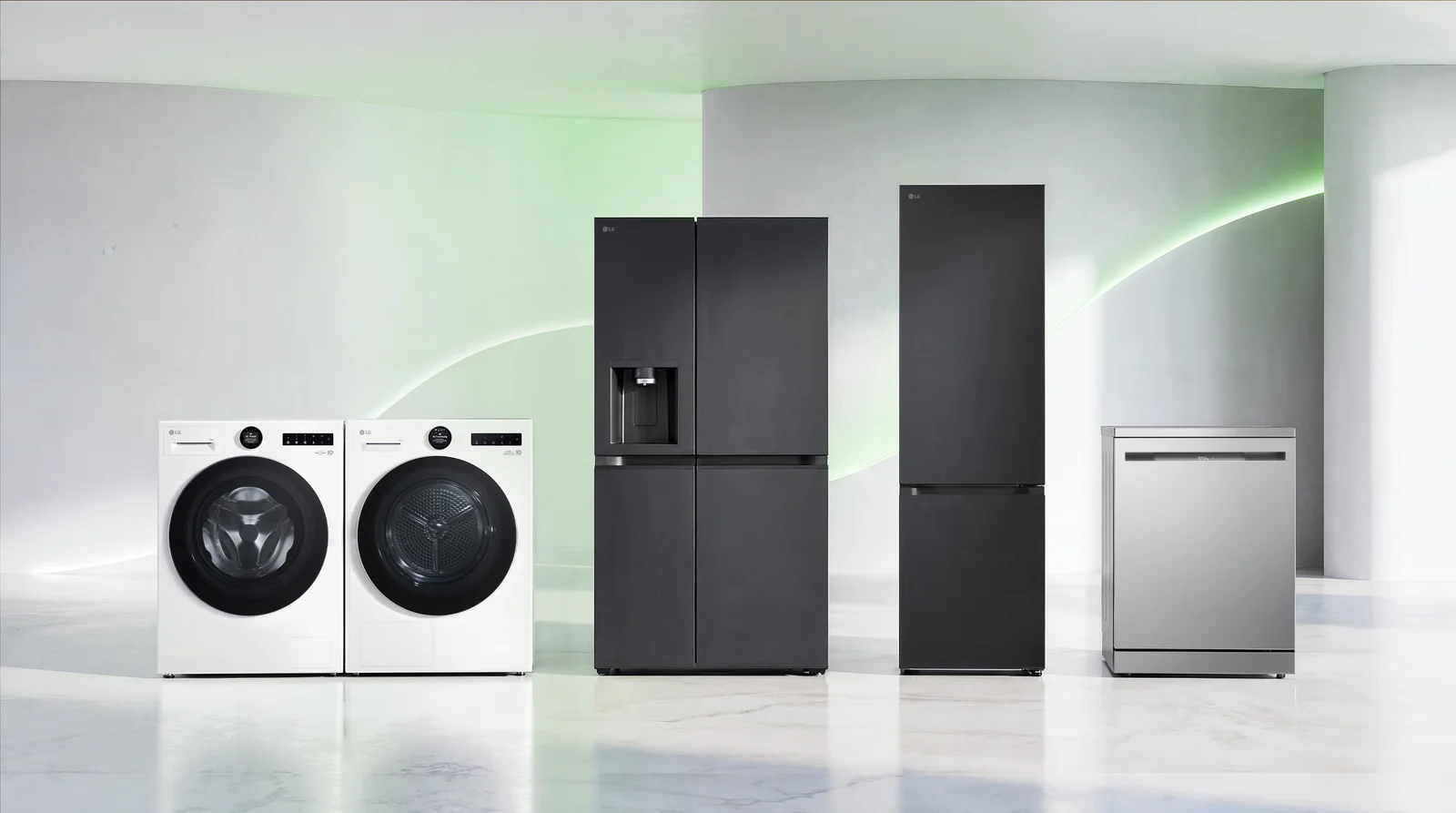
LG Electronics is expanding its energy-efficient appliance lineup at IFA 2026, bringing technologies previously associated with higher-end models into more accessible washing machines, dryers, refrigerators, and dishwashers.
The company’s latest lineup focuses on reducing electricity and water consumption through inverter motors, heat-pump technology, AI-assisted controls, and more precise appliance operation. For markets such as the Philippines, where household electricity costs remain a major consideration, the push toward more efficient appliances could make energy consumption a more important factor in everyday purchasing decisions.
A-grade efficiency across more appliances
LG’s Energy Leadership Zone at IFA 2026 highlights appliances that meet or exceed the European Union’s tightened A-grade energy-efficiency standards.
Several of the company’s latest products go beyond the applicable A-grade benchmark. A new washing machine exceeds the requirement by up to 70%, while a washer-dryer exceeds the benchmark by up to 30% in Washing Only mode and by up to 10% during its Complete Wash and Dry cycle.
Meanwhile, Bottom-Freezer refrigerators exceed the applicable A-grade requirement by up to 35%, while nearly the entire new dishwasher range achieves the applicable European A-grade rating. The European Union’s current energy label scale runs from A to G, with the A category deliberately recalibrated to make the highest efficiency tier more difficult to achieve.
LG’s strategy is to bring technologies that enable these efficiency gains across a wider range of products instead of restricting them to flagship appliances.

Inverter and heat-pump technology drives laundry efficiency
LG’s latest laundry appliances rely heavily on motor and heat-management technologies to reduce unnecessary energy consumption.
Its Direct Drive Motor and inverter control systems can adjust motor speed and output throughout different stages of a wash cycle. This allows the appliance to respond to the requirements of each stage rather than operating at a fixed output.
For dryers, LG is using Dual Inverter Heat Pump™ technology, which recycles heat within the system to reduce energy use while maintaining drying performance.
The company is also preparing a mass-premium dryer for later this year that moves from a previous European B-grade rating to the newer A-grade standard.
This is significant to LG’s broader strategy because the efficiency upgrade is not limited to its most expensive products.
Refrigerators use AI to adjust cooling
LG is also applying efficiency technologies to different refrigerator formats, including Bottom-Freezer, Side-by-Side, and French Door models.
The company’s Bottom-Freezer refrigerators exceed the applicable European A-grade requirement by up to 35%, while its Side-by-Side and French Door models meet the A-grade standard.
Cooling efficiency is supported by more precise control of the compressor and other components, as well as improvements to insulation and heat exchangers designed to reduce energy loss.
Some of the latest models also feature AI Saving mode, which analyzes usage patterns over three weeks before adjusting cooling performance during periods of lower activity.
The idea is relatively straightforward: the refrigerator does not need to operate at the same level when household usage drops, allowing its cooling system to adapt to actual usage patterns.
Dishwashers target both water and electricity consumption
LG’s efficiency push extends to dishwashers, with nearly the company’s entire new lineup achieving the applicable European A-grade rating.
One of the changes is a compact drive unit designed to reduce water consumption. Since heating water accounts for a significant portion of a dishwasher’s energy requirements, using less water can also reduce the energy required to heat it.
LG is also introducing Hybrid Air Dry, which increases air circulation to shorten drying times while delivering energy savings of up to 30% higher than the applicable European A-grade benchmark.
Another addition is AI SenseClean™, which can adjust cleaning cycles based on up to 32 variables. The system can modify factors such as temperature and cycle duration depending on the load instead of applying identical settings to every wash.
What LG’s efficiency push means for Filipino households
The technologies showcased at IFA 2026 reflect a broader shift in the appliance industry: energy efficiency is increasingly being treated as a core product feature rather than an exclusive benefit of premium models.
That distinction matters in the Philippines, where appliances such as refrigerators, washing machines, dryers, and dishwashers can contribute significantly to household electricity consumption.
However, European A-grade ratings should not be interpreted as a direct guarantee of specific savings on a Philippine electricity bill. Actual consumption depends on factors including usage frequency, household habits, local electricity rates, appliance settings, and Philippine energy-efficiency classifications.
Still, the technologies behind these products point toward a practical direction for consumers: appliances that can automatically adjust their operation, recycle heat, or reduce unnecessary water and motor use can potentially deliver efficiency improvements without requiring users to change their daily routines.
LG wants energy efficiency to move beyond premium appliances
LG’s IFA 2026 lineup suggests that the company’s approach to energy efficiency is shifting from individual flagship products toward a broader portfolio strategy.
By applying inverter controls, heat-pump systems, AI-assisted operation, and improved cooling and drying technologies across different price segments, LG is attempting to make lower energy consumption a more common feature of everyday appliances.
The company’s latest appliances will be showcased at the Energy Leadership Zone in Hall 18 of Messe Berlin during IFA 2026, running September 4 to 8.
For Filipino consumers, the bigger takeaway is not a single appliance but the direction of the category: as manufacturers push efficiency technologies into more affordable models, energy consumption is becoming an increasingly important part of the value proposition for home appliances.