
Acer is expanding its mobility ecosystem with a new lineup of Iconia Duo tablets and AI and AR glasses, aiming to strengthen its position in the premium Android productivity and immersive computing space.
The portfolio introduces three tablet models—Iconia Duo S14, S12, and D12—alongside two wearable devices: the Acer AR Vision GR0 and Acer GI0 AI glasses, all designed to push productivity beyond traditional screen-based workflows.
Iconia Duo series brings 3:2 OLED tablets for productivity and creativity
Acer’s new Iconia Duo lineup marks the company’s shift toward a productivity-first tablet strategy, with all three models adopting a 3:2 aspect ratio designed for document work, design tasks, and multitasking.
The lineup includes the Iconia Duo S14, a 14.2-inch 2.8K OLED model powered by MediaTek Dimensity 8300; the Iconia Duo S12, a 12.2-inch 2.8K OLED model powered by MediaTek Dimensity 7400; and the Iconia Duo D12, a 12.2-inch 2400×1600 LCD model powered by MediaTek Helio G99.
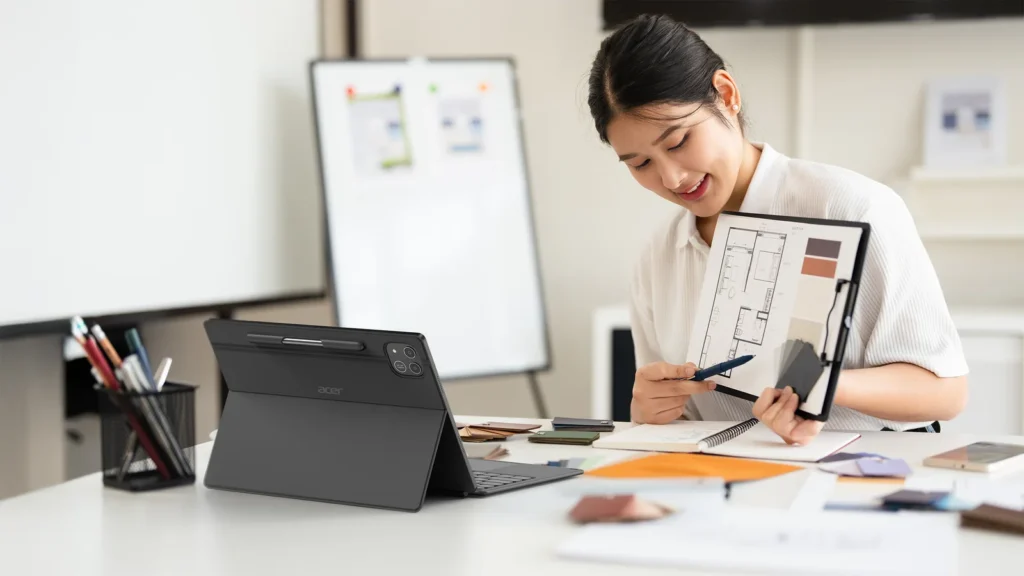
The S14 and S12 target professionals and creatives with high-resolution OLED panels, stylus support, and optional keyboard accessories. The D12 positions itself as a more accessible entry point while retaining the same productivity-focused form factor.
All models run on Android 16, support microSD expansion up to 1TB, and offer optional keyboard and stylus accessories for workstation-style use.

Performance push targets creators, professionals, and students
Acer is positioning the Iconia Duo S-series as mobile creative hubs rather than traditional entertainment tablets.
Key productivity features include up to 2.8K OLED displays with 120Hz refresh rate on the S14 and S12, MediaTek Dimensity chipsets for mid- to high-tier performance, dual USB-C connectivity for extended display workflows, and stylus and keyboard accessory support for hybrid use cases.
The larger Iconia Duo S14 also introduces desktop-like flexibility with display input/output support, enabling it to function as a portable monitor or secondary screen for presentations and collaboration.
Acer enters wearable computing with AR and AI glasses
Alongside its tablets, Acer is expanding into wearable computing with two distinct products targeting immersive and AI-assisted experiences.
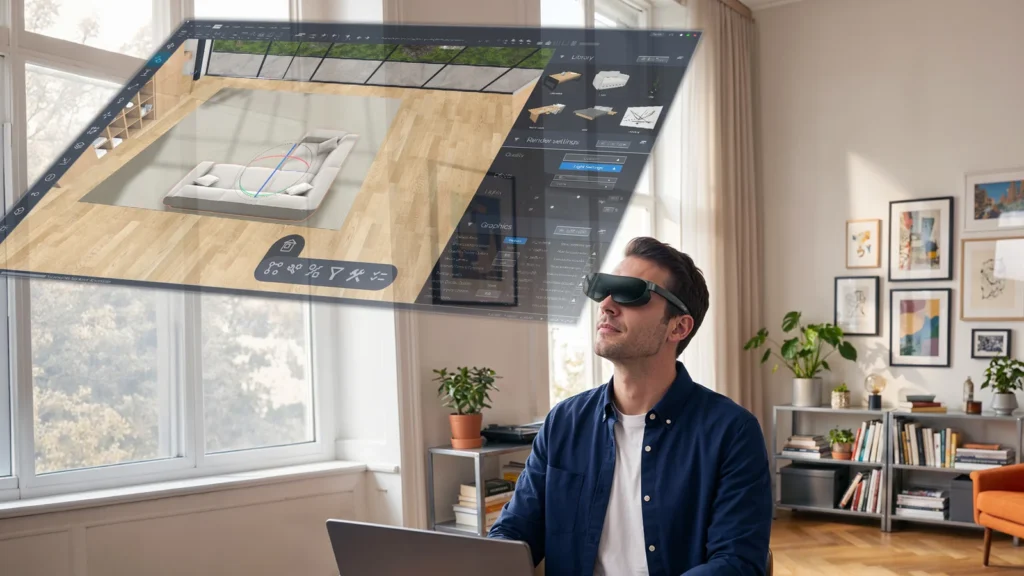
The Acer AR Vision GR0 connects to smartphones, laptops, and PCs to deliver a virtual display experience equivalent to a large-screen setup in a portable form factor. Key features include dual micro-OLED FHD displays, wired connectivity for low-latency performance, Android, iOS, and Windows compatibility, a lightweight 69g design, and use cases spanning gaming, productivity, and media viewing. Acer positions the device as a portable alternative for immersive viewing and privacy-focused work environments.
The Acer GI0 AI glasses focus on hands-free AI interaction, integrating a Google Gemini-powered assistant for real-time support. Core capabilities include voice-activated AI assistance, real-time translation and image analysis, a built-in camera for capture and documentation, Bluetooth and Wi-Fi connectivity via companion app, and cross-platform support for Android and iOS.
Unlike the AR Vision GR0, the GI0 leans toward utility and AI-driven productivity rather than immersive display experiences.
Acer strengthens ecosystem strategy beyond laptops and gaming
The launch signals Acer’s broader shift toward an integrated ecosystem that extends beyond PCs and gaming hardware into tablets, AI wearables, and spatial computing.
By combining Android tablets, AR glasses, and AI-powered eyewear, Acer is aligning itself with emerging trends in hybrid productivity and ambient computing—where users shift between devices seamlessly depending on context.
Competitive positioning in the AI mobility space
With this expansion, Acer enters a competitive field that includes Samsung’s Galaxy Tab ecosystem, Apple’s iPad lineup, and emerging AR/AI wearable platforms from multiple tech firms.
Its strategy centers on affordable-to-premium segmentation across tablet tiers, productivity-first 3:2 display standardization, integration of AI assistants into wearable devices, and cross-device compatibility across Android, iOS, and Windows.
As demand grows for lightweight computing and AI-assisted workflows, Acer’s latest portfolio positions it to compete across both traditional mobile devices and next-generation wearable interfaces.