Samsung has introduced Flex Titanium, a new display technology designed to improve the durability, flexibility, and viewing experience of its next-generation Galaxy foldable smartphones.
Announced ahead of the company’s next Galaxy Unpacked event, Flex Titanium builds on Samsung’s seven generations of foldable display development by redesigning the internal display structure with titanium-based materials. The result is a foldable screen that promises improved structural strength while making the display crease less noticeable.
Samsung redesigns foldable displays with Flex Titanium
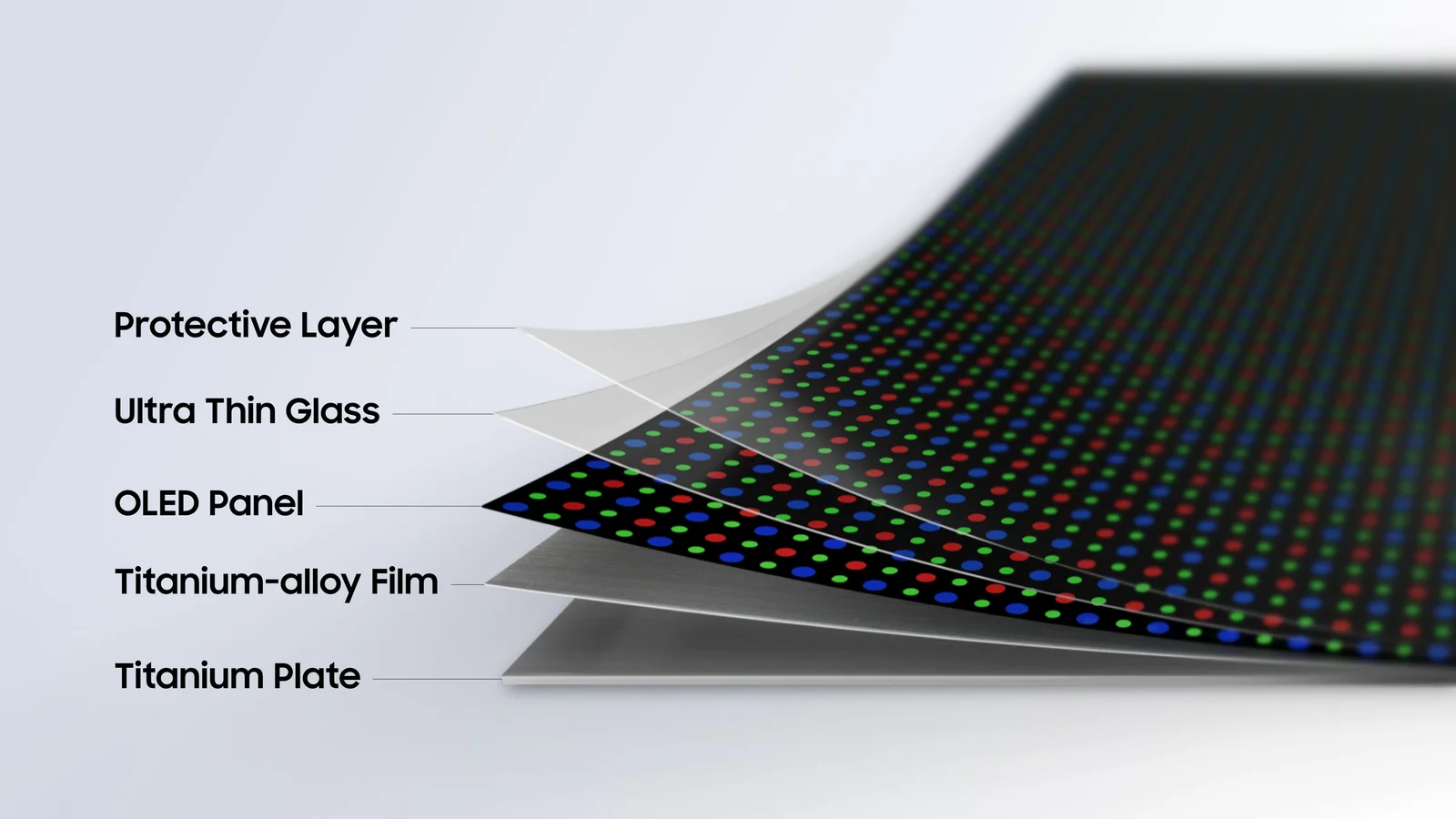
At the core of Samsung’s Flex Titanium technology are two titanium-based components that reinforce the foldable display without increasing its thickness.
The new structure consists of a titanium-alloy film positioned beneath the OLED display and a titanium support plate located below the display module.
Samsung says this combination enables the display to remain slim while offering greater resistance to repeated folding and external impacts.
According to the company, the titanium-alloy film delivers up to 20 times greater mechanical stiffness than conventional polymer films while remaining extremely thin—approximately one-third the thickness of a human hair.

Focus on durability and reduced crease visibility
Samsung says years of customer feedback helped shape the latest display architecture, with users consistently asking for foldable devices that offer a larger viewing area with a less visible crease without sacrificing durability or portability.
To address those concerns, Samsung redesigned the support structure beneath the OLED panel.
The titanium plate incorporates precision micro-patterned holes that improve flexibility while maintaining structural rigidity. Samsung also eliminated air gaps between the display module and supporting plate through a new bonding process, creating more consistent support when the device is unfolded.
The company says these structural improvements help reduce crease visibility while preserving the flexibility needed for repeated folding.
Display efficiency also gets an upgrade
Beyond the structural improvements, Samsung has also upgraded the display panel itself.
The company combined its new Flex Titanium structure with a higher-resolution display architecture, next-generation organic OLED materials, and improved power efficiency.
According to Samsung, these enhancements enable the display to produce brighter visuals while consuming less power, helping improve battery efficiency without compromising image quality.
Seven generations of foldable innovation
Samsung credits the development of Flex Titanium to years of engineering work on foldable smartphones, beginning with its early Galaxy Fold devices.
According to the company, advancing foldable displays required balancing three key factors: structural strength, long-term flexibility, and thin, lightweight construction.
Samsung says titanium was selected because it provides the durability needed to withstand repeated folding while remaining light enough for modern smartphone designs.
“Samsung’s strength in the foldable category comes from connecting user needs with our technologies that deliver tangible benefits in everyday life,” said Samsung’s Mobile R&D Office Executive Vice President Sunghoon Moon.
Coming to the next Galaxy foldables
Samsung confirmed that Flex Titanium will debut in its next generation of Galaxy foldable smartphones, with additional details expected during the upcoming Galaxy Unpacked event.
The announcement signals Samsung’s continued push to refine foldable devices through hardware innovations that focus not only on durability but also on improving the overall viewing experience.