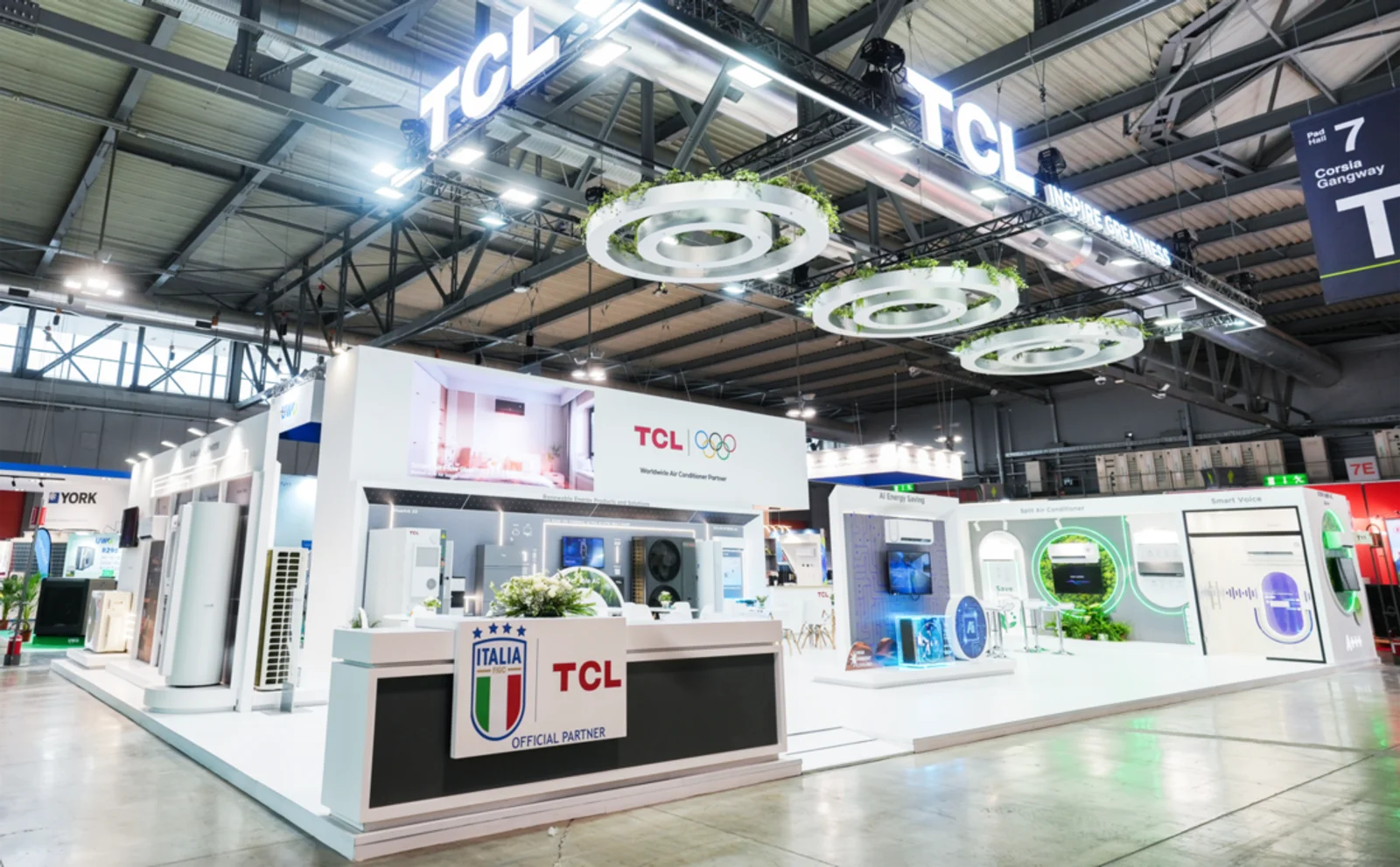
TCL Electronics used its presence at MCE – Mostra Convegno Expocomfort 2026 to highlight its latest push into AI-driven air conditioning systems. The company showcased residential and light commercial HVAC solutions designed around energy efficiency, smart control, and improved indoor air quality.
The presentation reflects TCL’s broader strategy of expanding beyond consumer electronics into intelligent climate systems, positioning itself in the growing global demand for connected and energy-efficient HVAC technology.
AI-driven air conditioning takes center stage in TCL’s climate strategy
At the core of TCL’s exhibit is a portfolio built around three technology pillars: AI Health, AI Voice Control, and AI Energy-Saving. These systems are designed to automate climate control while reducing energy consumption in homes and commercial spaces.
The lineup includes models such as FreshIN 3.0, VoxIN, SaveIN, and BreezeIN, each targeting different use cases from air purification to voice-controlled cooling. TCL is positioning these systems as part of a broader shift toward smart home ecosystems where climate control adapts automatically to user behavior and environmental conditions.
FreshIN 3.0 and VoxIN highlight smart home integration
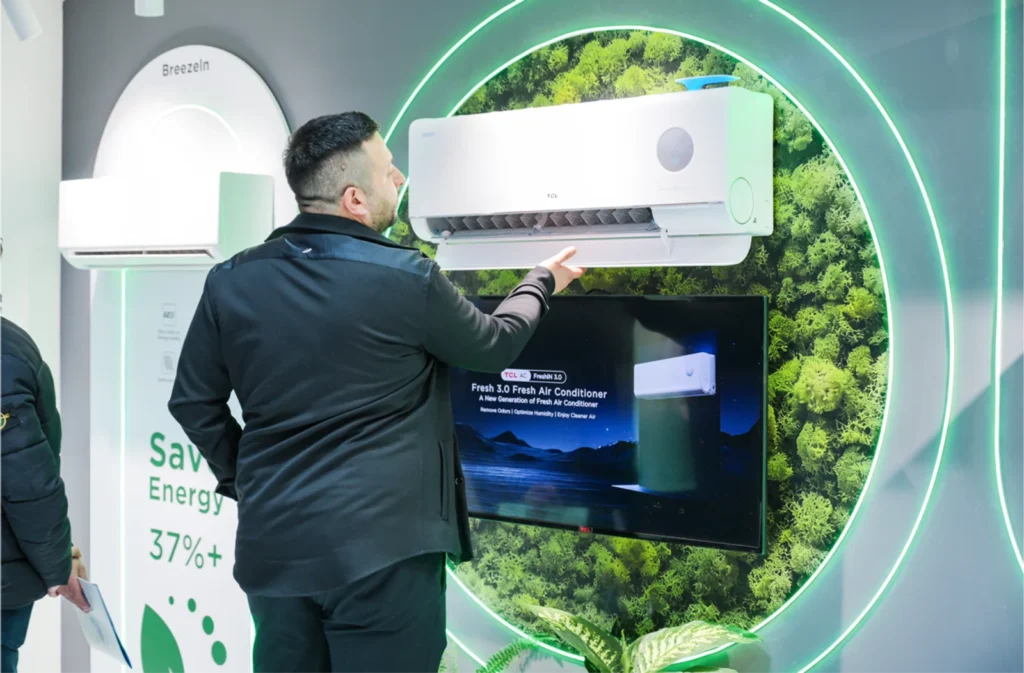
Two of the key residential products, FreshIN 3.0 and VoxIN, demonstrate TCL’s focus on combining air quality management with smart automation.

FreshIN 3.0 integrates multi-layer filtration and real-time air quality monitoring, aiming to improve indoor air conditions while maintaining low noise operation. It also supports energy-saving algorithms that adjust performance based on usage patterns.
VoxIN, meanwhile, introduces offline voice control, allowing users to adjust settings without internet connectivity. This reflects a broader industry trend toward more responsive and locally controlled smart appliances.
Commercial HVAC systems target flexible building management
Beyond residential use, TCL also showcased its light commercial HVAC solutions designed for offices, hotels, and retail environments.
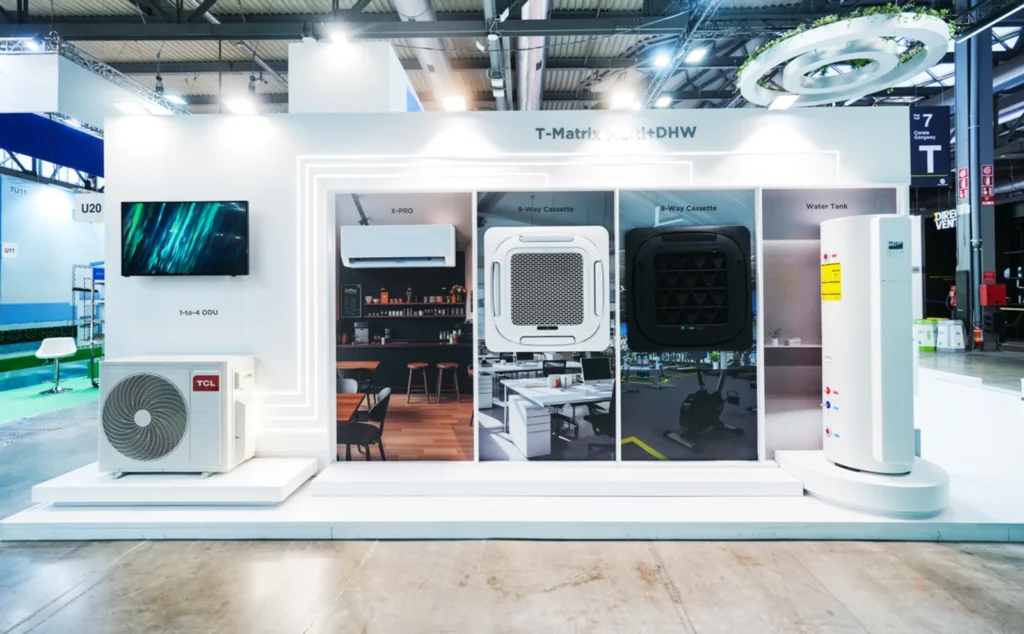
A key feature is the Free-Match system, which allows a single outdoor unit to support multiple indoor units across different zones. This enables more flexible temperature control in large buildings while reducing infrastructure complexity.
TCL also highlighted integration with building management systems (BMS) and third-party platforms, signaling its push toward enterprise-level HVAC ecosystems that can be centrally monitored and optimized.
Energy efficiency and low-temperature performance as competitive focus
Energy efficiency remains a central theme in TCL’s HVAC lineup. The company emphasized systems designed for reduced power consumption while maintaining stable performance in extreme conditions.
Some models are engineered to operate in very low ambient temperatures, while others focus on heat dissipation and self-cleaning functions to maintain long-term system stability. These features are increasingly important as energy regulations tighten across Europe and other major markets.
TCL aligns HVAC strategy with global smart energy transition
TCL’s participation at MCE 2026 reflects its broader push to position itself in the global smart energy and sustainable building technology space. The company is leveraging its display and electronics expertise to compete in HVAC systems that increasingly rely on AI, connectivity, and automation.
The strategy aligns with a wider industry shift where air conditioning is no longer treated as standalone hardware but as part of integrated smart home and smart building ecosystems.
As competition in the HVAC sector intensifies, TCL is betting on AI-powered efficiency and cross-platform integration to strengthen its global position in climate technology.