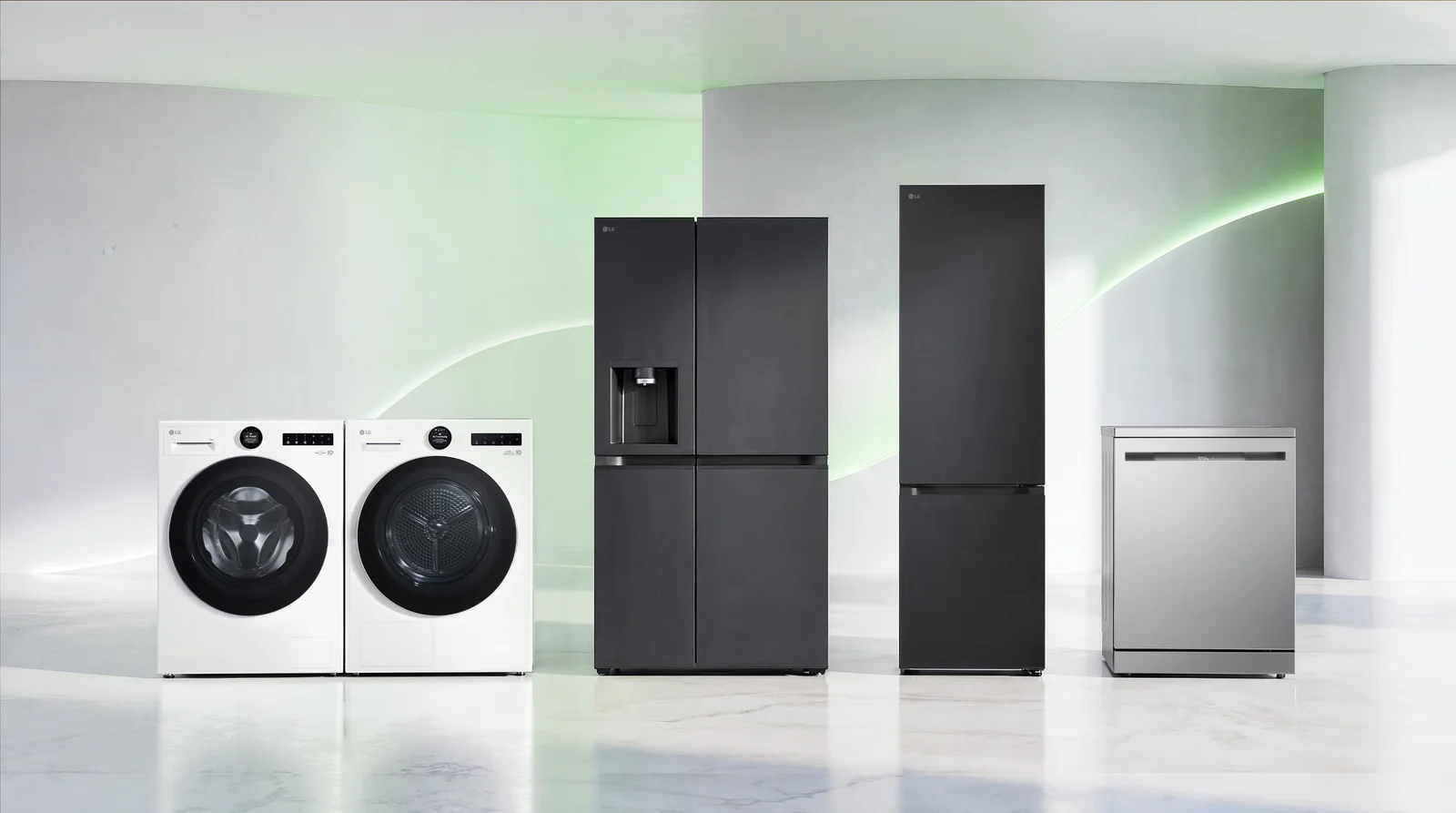

A smart home usually means a collection of connected appliances. LG wants to make it something more intuitive: a home that can understand how people live in it and respond accordingly. At IFA 2026, LG Electronics is showcasing its AI Home vision.
This brings together AI-powered appliances, connected services, energy management, and security to create a home that can adapt to routines and changing household needs.
The idea moves beyond controlling individual devices through an app or voice command. Instead, LG wants its technology to understand context—such as schedules, preferences, appliance usage, and the environment—to determine what could make a particular moment easier.
LG wants AI to understand the household, not just commands
Every household operates differently. Morning routines change, work schedules shift, and the needs of a home can vary depending on who is there.
LG AI Home is designed around this context. The system can analyze routines, schedules, environmental conditions, and appliance usage to recommend or initiate appropriate actions across connected devices and services.

For Filipino households, the concept could have practical applications ranging from helping busy families coordinate daily chores to managing indoor comfort during hot weather.
Instead of requiring users to constantly adjust individual appliances, the goal is to make the technology work more naturally around the people using it.
That represents a broader shift in smart-home technology: from connected devices toward a connected living environment.
ThinQ Claw puts an AI agent inside the smart home
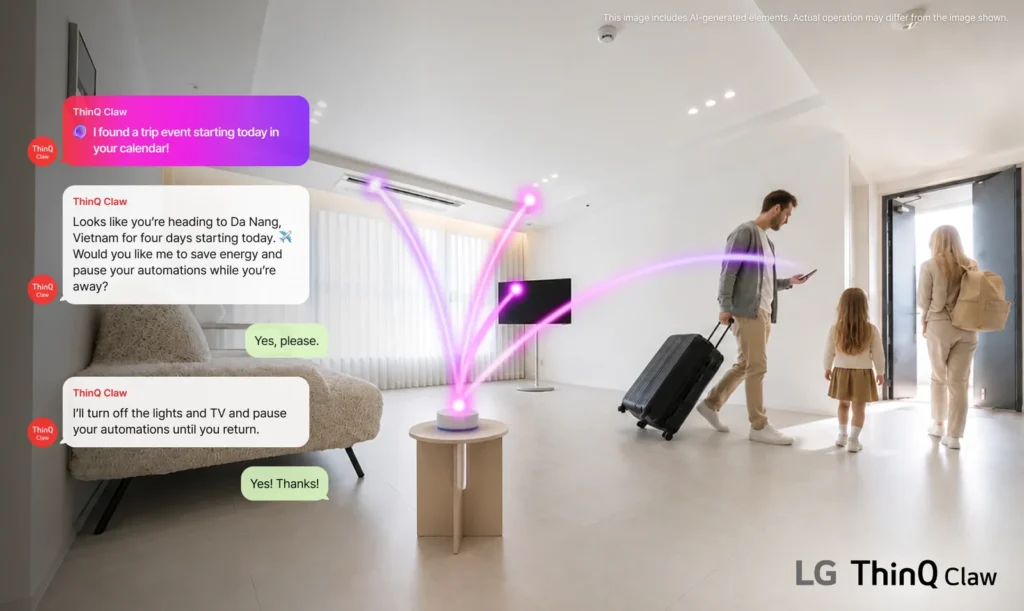
One of LG’s demonstrations at IFA 2026 is LG ThinQ Claw, a text-based AI agent designed to demonstrate how contextual intelligence could change the way people interact with their homes.
Rather than treating every interaction as an isolated command, ThinQ Claw is designed to consider a user’s routines and preferences when determining what actions may be relevant.
For example, the system could help coordinate cooking appliances when someone is preparing for guests or check indoor temperature and air quality before the person arrives home.
Its chat interface can also interact with connected services such as calendars, while retaining preferences over time to support more personalized recommendations.
ThinQ Claw remains a demonstration of LG AI Home direction in the future, but it highlights where the company sees AI-enabled home management heading: less manual control and more contextual assistance.
LG connects appliances, energy and the wider smart home
For an AI-powered home to be genuinely useful, its individual components need to communicate with one another.

LG is therefore continuing to expand its open smart-home ecosystem, with an emphasis on compatibility and connectivity across devices and services.
The company is also bringing that approach to household energy management.
At IFA 2026, LG is demonstrating a Home Energy Management System that can coordinate energy generation, storage, and consumption through connected technologies such as smart meters, solar panels, home batteries, and EV chargers.
By connecting these systems with LG appliances, the platform can provide households with greater visibility into energy usage and help optimize how electricity is consumed.
For consumers, the appeal is less about adding another smart-home dashboard and more about using connected technology to make energy decisions with less manual effort.
Smart homes also need stronger security
More connected devices also mean more data and more potential points of exposure, making security an important part of LG’s AI Home strategy.
LG’s Shield security framework is designed to protect connected appliances, services, and customer data across its AI Home ecosystem.
The company is also demonstrating how its AI-powered management technology can extend beyond individual homes.
At IFA 2026, the European debut of LG ThinQ Pro showcases applications for shared residential and commercial environments, pointing toward a broader role for AI in managing connected devices and facilities.
The AI Home is less about gadgets and more about context
LG’s IFA 2026 demonstrations point toward a version of the smart home where people spend less time thinking about the technology itself.
The long-term goal is not simply to have more appliances connected to the internet. It is to have those appliances understand enough about a household to coordinate around routines, preferences, comfort, energy use, and security.
That distinction could determine how useful AI becomes inside the home.
If LG’s vision works as intended, the smartest home may ultimately be the one that requires its residents to do less managing—not more.