
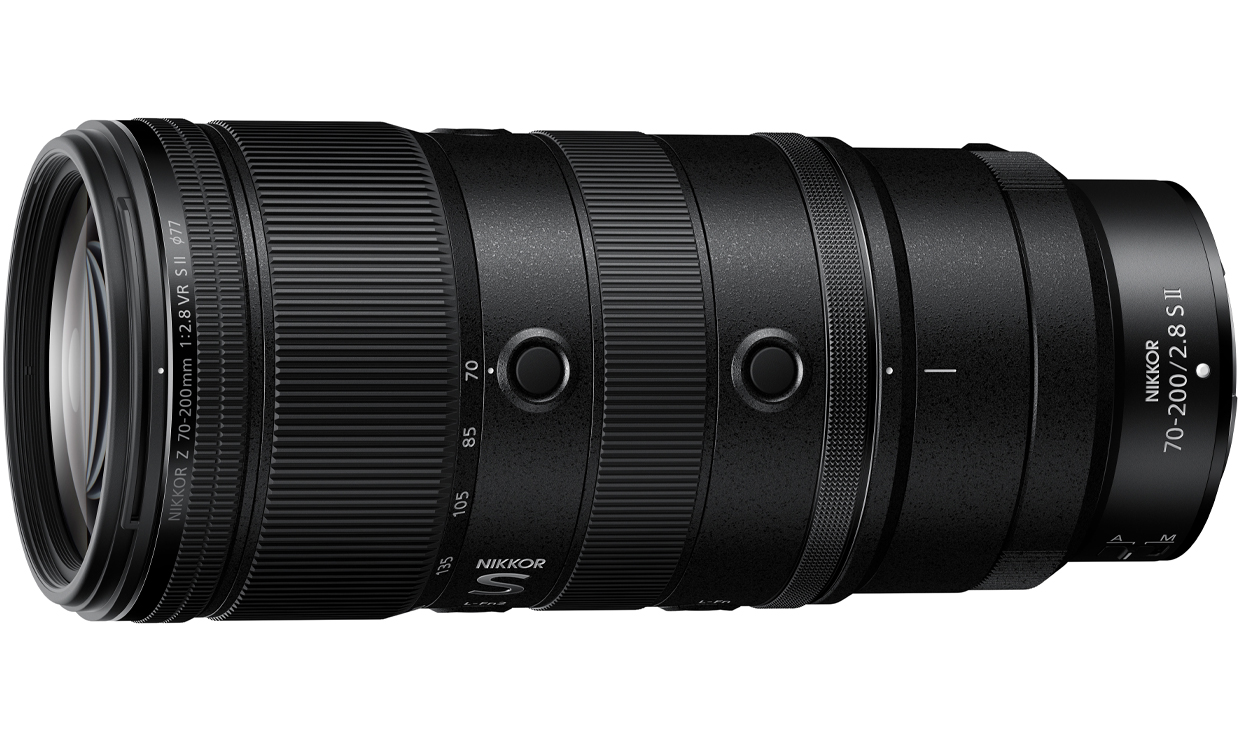
Nikon Inc. has announced the new NIKKOR Z 70-200mm f/2.8 VR S II, a premium fast telephoto zoom lens for full-frame/FX-format Z-mount mirrorless cameras.
The second-generation model brings notable upgrades in autofocus speed, optical refinement, and portability, targeting professional photographers and videographers who demand high performance across sports, events, wildlife, and portrait work.
The 70-200mm f/2.8 focal range has long been considered an essential lens category for professionals, combining versatility with strong low-light capability and subject separation. With this update, Nikon aims to further refine that formula while reducing overall weight and improving handling.
26% Lighter with Improved Balance
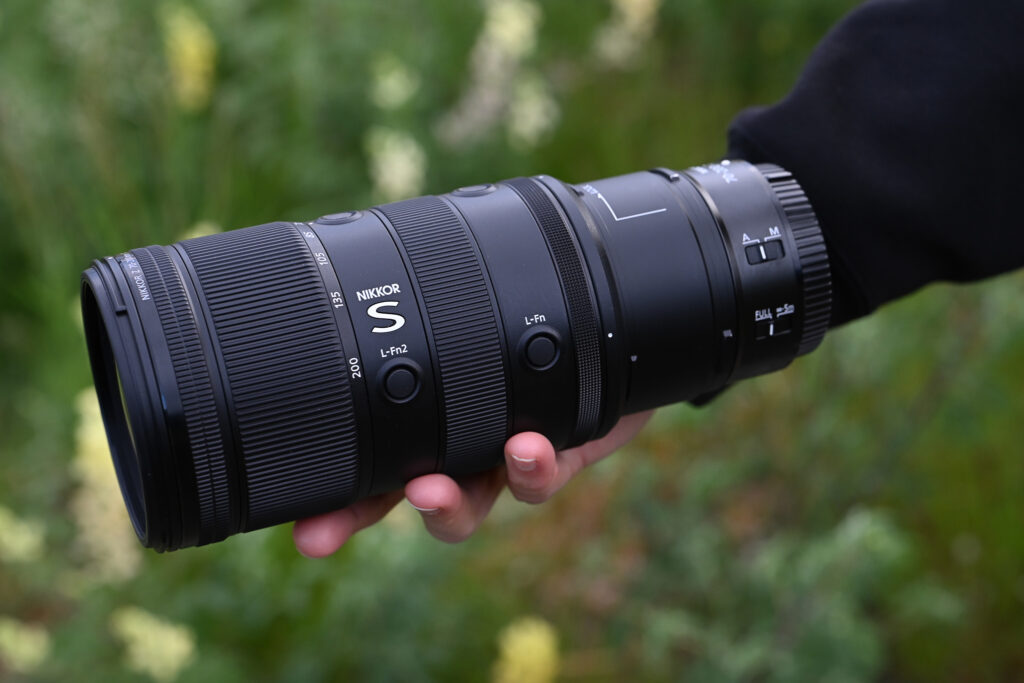
Weighing 998 grams, the NIKKOR Z 70-200mm f/2.8 VR S II is 26% lighter and 12mm shorter than its predecessor, making it the lightest in its class according to Nikon. The weight reduction was achieved by modifying the front lens group configuration and simplifying mechanical components within the moving lens groups.
The lens maintains an internal zoom design, meaning its physical length remains constant while zooming. This contributes to better balance during handheld shooting and makes it suitable for gimbal use. A removable tripod collar ring supports quick transitions between portrait and landscape orientations, and the lens is the first NIKKOR model compatible with Arca-Swiss tripod heads.
Faster Autofocus and Enhanced Tracking
The lens introduces Nikon’s Silky Swift VCM (SSVCM) autofocus drive system, delivering significantly faster and quieter performance for both stills and video. Autofocus speed is approximately 3.5 times faster than the previous version, while tracking during zooming is said to be about 40% more effective.

These improvements are designed to benefit photographers capturing fast-moving subjects such as athletes, wildlife, and vehicles, where precision and responsiveness are critical.
Refined Optical Formula and Bokeh
Nikon has revised the optical formula to reduce lens elements while optimizing placement of specialized glass. The lens incorporates six types of elements, including Super ED, aspherical ED, ED, aspherical, fluorite, and Short-wavelength Refractive (SR) elements to control chromatic aberration and enhance overall clarity.
An 11-blade rounded diaphragm is designed to produce smoother, more circular bokeh, complementing the constant f/2.8 aperture that supports low-light shooting and subject isolation.
The lens also features Nikon’s Meso Amorphous Coat — described as offering the highest anti-reflection performance in the company’s history — along with ARNEO Coat to suppress ghosting and flare.
Close Focusing and Stabilization
With a minimum focus distance of 0.38 meters at the wide end and 0.8 meters at the telephoto end, the lens achieves a maximum reproduction ratio of 0.3× (wide) and 0.25× (tele), allowing users to capture tighter compositions than before.
It also delivers up to 6.0 stops of vibration reduction when paired with compatible cameras supporting Synchro VR, helping stabilize images in low-light or telephoto scenarios.
Durability and Professional Features
Built for demanding environments, the lens offers dust- and drip-resistant construction and a fluorine coating on the front element to guard against dirt and smudges. A control ring clicking switch allows users to enable or disable tactile feedback for smoother video operation.
The included lens hood features a filter adjustment window, enabling photographers to adjust circular polarizers or variable ND filters without removing the hood. The lens is also compatible with Z TELECONVERTER TC-1.4× and TC-2.0× for extended reach.
Price and Availability
The NIKKOR Z 70-200mm f/2.8 VR S II is scheduled for release in late March 2026 with a suggested retail price of $3,199.95 in the United States.
With a lighter build, upgraded autofocus system, and refined optics, Nikon’s latest S-Line telephoto zoom continues to evolve one of the most essential lenses in professional photography.