
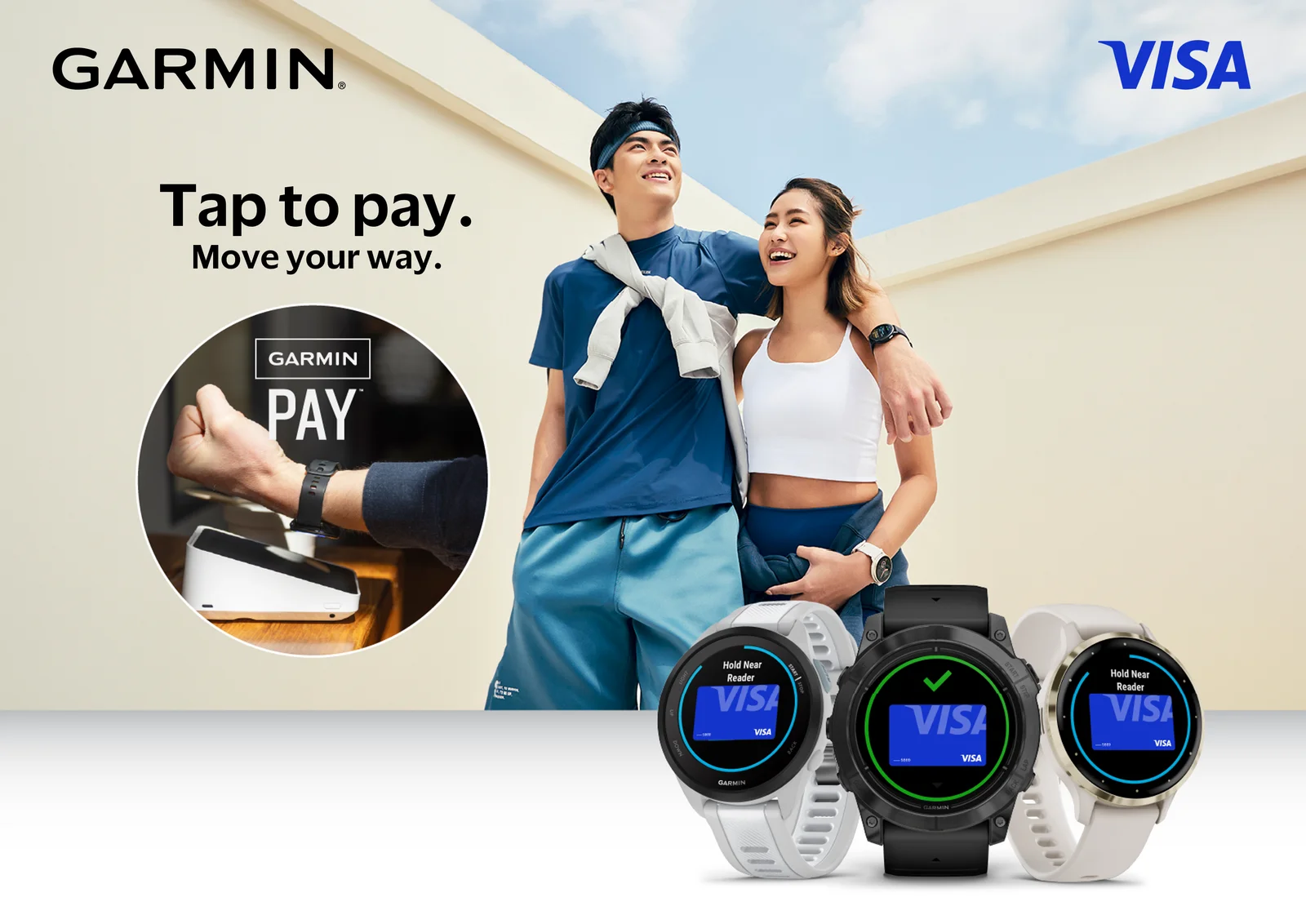
The service is now available for Visa debit and credit cards issued by participating banks, including EastWest Bank and GoTyme Bank, as well as select foreign-issued Visa cards supported by Garmin Pay.
The launch strengthens Visa’s push toward tokenized, device-based payments in Southeast Asia, positioning the Philippines alongside markets like Singapore, Vietnam, Thailand, and Malaysia where Garmin Pay is already active.
Smartwatches Enter the Payments Mainstream
Garmin Pay allows users to tap and pay at contactless-enabled terminals using their smartwatch, removing the need to carry a physical card or smartphone. Transactions are secured through Visa’s tokenization system, which replaces sensitive card data with unique digital identifiers.
The system supports contactless payments via compatible Garmin wearables, Visa tokenization for enhanced transaction security, participating Philippine banks and select global cards, and acceptance at NFC-enabled payment terminals.
Visa said the technology reduces fraud risk by ensuring real card numbers are never shared with merchants or stored on devices.
Philippines Pushes Toward a Cash-Lite Economy
The rollout reflects the continued expansion of digital payment infrastructure in the Philippines, where mobile wallets, QR payments, and contactless systems are steadily gaining traction.

According to Visa, wearable payments align with regional consumer behavior, with over 71% of consumers in Asia Pacific preferring mobile or smart devices for in-store transactions.
For the Philippines, the introduction of Garmin Pay adds another layer to the country’s cashless transition, complementing existing platforms like Google Pay and mobile wallet ecosystems.
Tourism and Cross-Border Payment Convenience
Beyond domestic use, Visa positions Garmin Pay as a tool for smoother travel experiences. The system enables Filipino travelers abroad—and foreign tourists in the Philippines—to make payments without relying on physical cash.
Visa noted that 97% of Asia Pacific travelers prefer using cards or digital payments abroad, only 17% still rely on carrying foreign currency, and 44% of tourists in the Philippines report payment friction, including merchant non-acceptance.
By enabling wearable payments, Visa aims to reduce these friction points while improving transaction speed and security across tourist-heavy environments.
Expanding the Wearable Payments Ecosystem
Visa Philippines said the launch reinforces its broader strategy of expanding contactless payment options across devices, including smartphones, wearables, and transport systems.
Jeffrey Navarro, Country Manager for Visa Philippines, said wearable payments help accelerate the country’s shift toward a more digital-first economy while improving convenience for consumers and merchants.
As wearable adoption grows, Garmin Pay adds another option in a competitive digital payments landscape increasingly shaped by tokenization, interoperability, and real-time transaction security.