
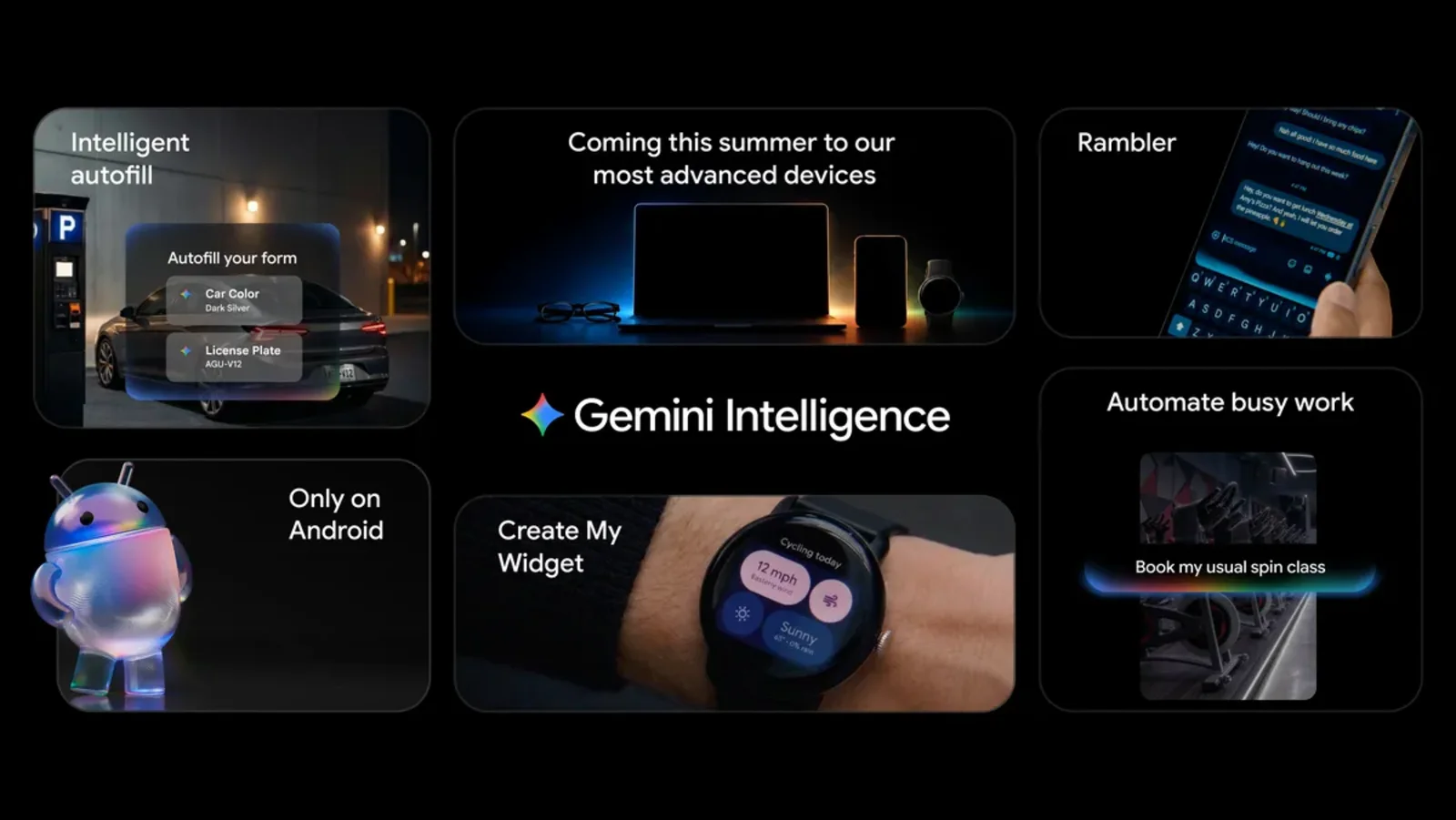
The rollout begins this summer on the latest Samsung Galaxy and Google Pixel smartphones before expanding later this year to other Android-powered devices including smartwatches, cars, laptops, and XR glasses.
Gemini Intelligence turns Android into a proactive assistant
Google positions Gemini Intelligence as a deeper integration of AI into Android rather than a standalone chatbot experience.
The system combines Gemini AI models with Android’s hardware and software stack to automate multi-step tasks across apps while keeping users in control of permissions and actions.
According to Google, Gemini Intelligence can handle workflows such as booking appointments, reserving parking spaces, building shopping carts from screenshots or notes, pulling information from Gmail, managing travel and rideshare tasks, and automating food delivery processes.
The feature relies heavily on contextual awareness, allowing Gemini to understand what appears on-screen or within uploaded images. For example, users can long-press the power button while viewing a grocery list and ask Gemini to automatically create a delivery order using supported shopping applications.
AI-powered app automation expands on Android
Google said it spent months optimizing app automation capabilities on devices like the Samsung Galaxy S26 and Pixel 10 to ensure smoother interactions across third-party apps.

The move reflects a broader industry trend where smartphone makers are shifting AI away from novelty features and toward practical task automation.
Unlike traditional voice assistants that handle isolated commands, Gemini Intelligence focuses on chained actions that span multiple apps and services.
Google emphasized that Gemini only acts after direct user prompts and stops once the requested task is completed.
Gemini arrives inside Chrome on Android
Google is also bringing Gemini directly into Google Chrome for Android starting in late June.
The integration introduces AI-assisted browsing tools capable of summarizing webpages, comparing information across tabs, assisting with research, and handling repetitive browsing tasks.
Google said Chrome’s upcoming “auto browse” functionality can also help users complete actions such as booking appointments or reserving parking spaces directly from the browser experience.
The move positions Chrome more competitively against emerging AI-native browsers and assistants as companies increasingly integrate generative AI directly into everyday web navigation and productivity workflows.
Autofill evolves into a context-aware AI assistant
Autofill with Google is also receiving a major upgrade through Gemini’s Personal Intelligence system.
Instead of only storing passwords and saved details, Autofill can now pull contextual information from connected apps to complete more complex forms automatically.
Google stressed that this feature remains fully opt-in, giving users control over whether Gemini can access connected app information.
The company’s focus on privacy and user permissions comes as AI-powered operating systems face growing scrutiny over data handling and personal information access.
Rambler cleans up speech-to-text conversations
Google also introduced Rambler, a new Gemini Intelligence feature for Gboard that refines spoken text into cleaner written messages.
Rather than transcribing speech word-for-word, Rambler removes filler words, repeated phrases, and verbal pauses while preserving the user’s intended meaning.
The feature supports multilingual conversations and can seamlessly switch between languages within the same message.
Google said audio used by Rambler processes in real time and is not stored.
Android moves toward generative interfaces
One of the more experimental additions is Create My Widget, a generative AI feature that allows users to create custom Android widgets using natural language prompts.
Users can describe the type of information they want surfaced, and Gemini automatically builds a functional widget around those preferences.
Example use cases include weekly high-protein meal prep dashboards, weather widgets focused specifically on wind speed and rainfall, personalized productivity trackers, and cycling-focused weather summaries.
The feature marks Google’s first major step toward generative user interfaces on Android, where AI dynamically creates personalized interface elements instead of relying solely on fixed app layouts and pre-designed widgets.
Gemini Intelligence signals Android’s next AI phase
Gemini Intelligence arrives as Google, Samsung, Apple, and other major tech companies race to redefine smartphones around AI-first experiences.
Rather than focusing purely on generative content creation, Google is pushing Android toward contextual automation, proactive assistance, and personalized interfaces.
Google said the new system also builds upon its updated Material 3 Expressive design language, aiming to reduce distractions while making AI interactions feel more natural across devices.
The initial rollout begins this summer on supported flagship devices, with broader Android ecosystem support expected later this year.