
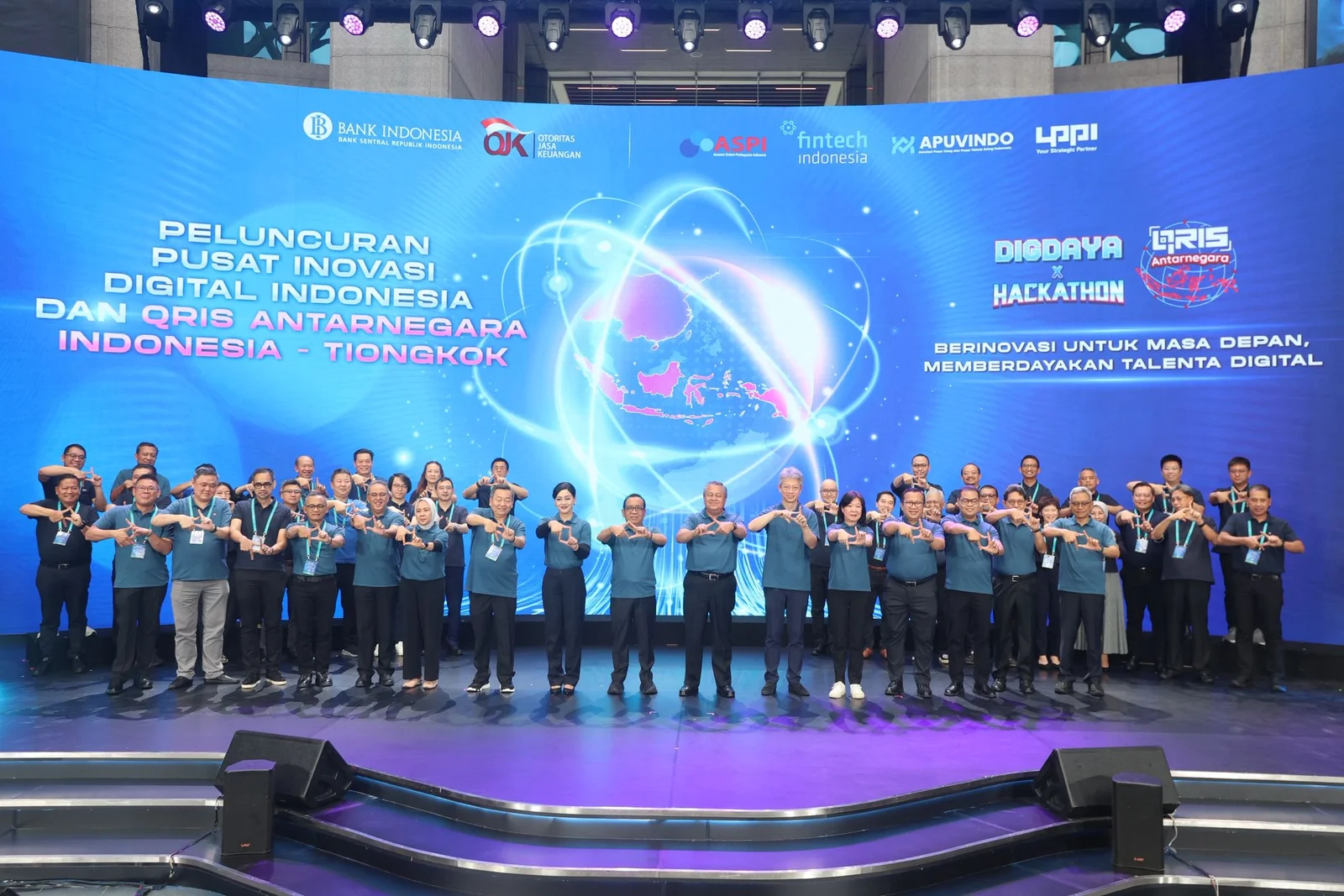
Indonesia and China have officially launched a cross-border QR payment connectivity that links Indonesia’s QRIS system with China’s payment networks, marking a major step toward interoperable digital payments in Asia. The rollout is powered by Ant International through its unified wallet gateway Alipay+, alongside UnionPay International.
The system allows users in both countries to pay using their domestic e-wallets while merchants receive settlements through their existing payment infrastructure, reducing friction in tourism and cross-border retail transactions.
QRIS and China payment systems now interconnected
The integration connects Indonesia’s Quick Response Code Indonesian Standard (QRIS) with China’s QR-based payment ecosystem, enabling seamless transactions between the two markets without requiring new hardware from merchants.
On the consumer side, users of Alipay and UnionPay-supported apps can now transact across more than 40 million QRIS merchants in Indonesia and over 80 million QR codes in China.
The rollout targets both tourism spending and everyday retail payments, with a strong focus on micro, small, and medium enterprises (MSMEs), which form the backbone of Indonesia’s business landscape.
MSMEs expected to benefit from tourism-driven spending
The initiative is designed to directly support small businesses by unlocking spending from Chinese tourists visiting Indonesia. Recent figures show that Chinese arrivals reached 1.34 million visitors in 2025, marking a multi-year high and signaling recovering outbound travel demand.

Key expected impacts include easier payment acceptance for MSMEs without system upgrades, increased tourist spending due to reduced payment friction, stronger revenue flows for retail, food, and tourism sectors, and broader access to cross-border digital commerce.
Because QRIS merchants already operate on a unified QR standard, adoption requires no additional onboarding, allowing faster scaling compared to traditional card-based cross-border payment systems.
Asia moves toward interoperable payment networks
The launch reflects a wider regional push toward real-time, interoperable payment systems across Asia, where governments are increasingly linking national QR schemes to improve trade and tourism flows.
The Indonesia–China linkage builds on earlier QRIS expansion efforts across ASEAN markets and signals a growing trend toward payment system convergence rather than isolated national ecosystems.
Bank Indonesia and People’s Bank of China led the policy coordination, while Ant International provides the interoperability layer through Alipay+.
Alipay+ expands role as cross-border payment gateway
Alipay+ continues to position itself as a unified connectivity layer linking regional payment systems.
The platform connects over 2 billion user accounts globally, more than 150 million merchants, around 50 wallet and bank app partners, and over 10 national QR payment schemes.
Instead of replacing domestic payment systems, Alipay+ functions as a bridge that enables wallets from different countries to interact without requiring structural changes to local infrastructure.
This model reflects a broader shift in fintech strategy across Asia, where interoperability and wallet connectivity are becoming increasingly important compared to standalone payment ecosystems.
Regional digital payments competition intensifies
The Indonesia–China QR linkage adds momentum to Southeast Asia’s rapidly expanding digital payments landscape, where platforms are increasingly competing for cross-border transaction flows tied to tourism and e-commerce.
As QR-based payments become more widely adopted across the region, interoperability initiatives such as QRIS-linked networks are expected to reduce reliance on cash during cross-border travel, strengthen local currency usage in transactions, increase fintech competition across Asia-Pacific markets, and accelerate digital financial inclusion for SMEs.
Cross-border payments shift toward unified ecosystems
The launch signals a structural shift in how cross-border payments are being built in Asia—moving away from card-centric models toward QR-based, wallet-to-wallet interoperability. For governments and fintech providers, the focus is now on scale, accessibility, and seamless user experience.
With Indonesia and China now connected, similar integrations are expected to expand further across ASEAN and beyond, positioning QR-based payments as a core infrastructure layer for regional trade and tourism.