
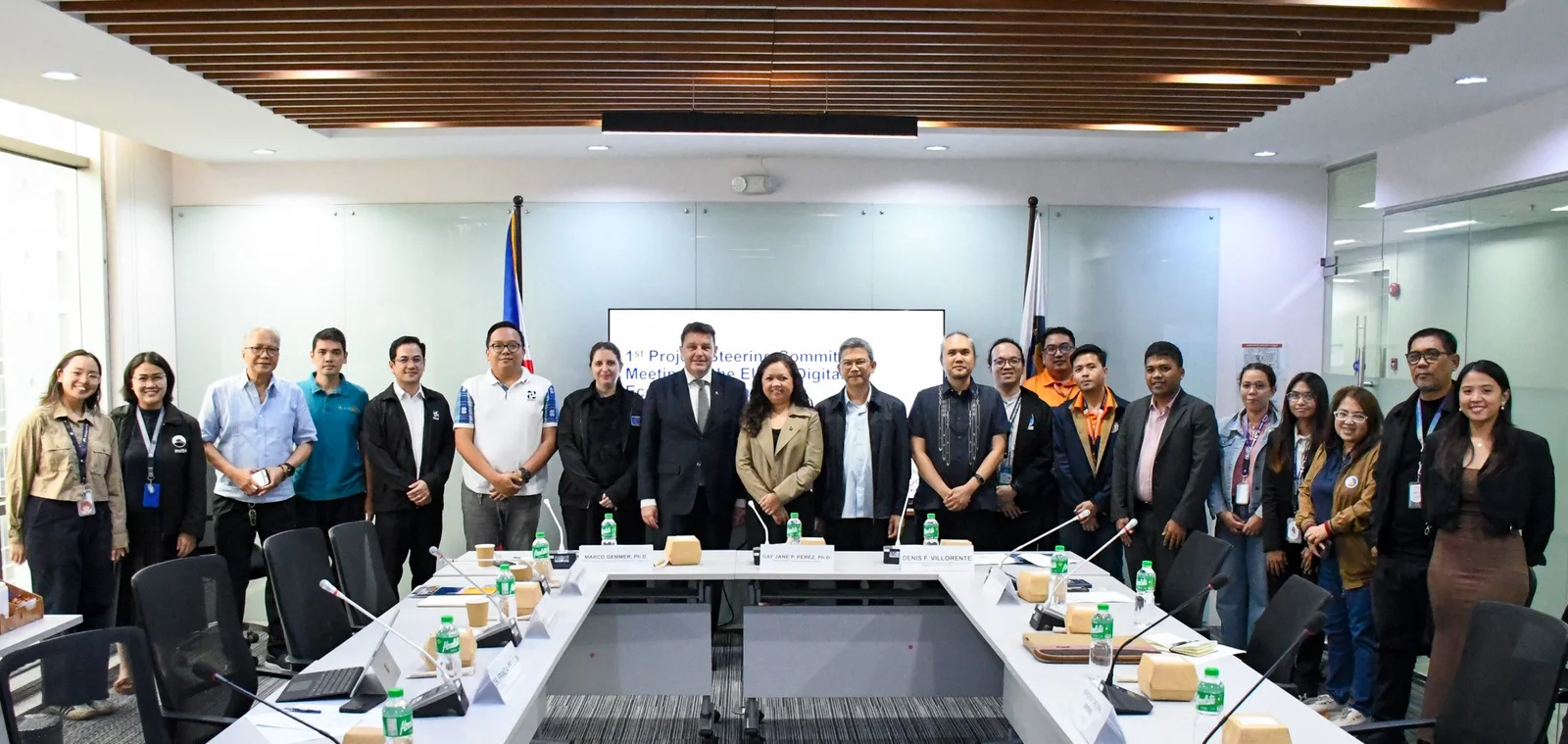
The European Union and the Philippines have taken another step in their digital cooperation efforts, holding the first Project Steering Committee Meeting for the EU-Philippines Digital Economy Package. The initiative aims to strengthen connectivity, expand access to satellite data, support 5G regulatory development, and improve cybersecurity capabilities across the country.
The meeting, held on June 4, brings together Philippine government agencies and European partners tasked with implementing the multi-million-euro program designed to help position the Philippines as a regional digital hub.
€22.6 Million Program Targets Digital Infrastructure Growth
The EU-Philippines Digital Economy Package is backed by €20 million in funding from the European Union, alongside an additional €2 million from Finland and €600,000 from France.
The initiative forms part of the European Union’s broader Global Gateway strategy, which supports digital, energy, transport, health, education, and research projects worldwide through sustainable infrastructure and capacity-building investments.
The program focuses on improving bandwidth connectivity and digital infrastructure, expanding access to Copernicus Earth observation satellite data, supporting 5G regulatory and policy development, strengthening cybersecurity skills and capabilities, and enhancing disaster management and climate resilience through data-driven solutions.
Through these efforts, the European Union aims to support the Philippines’ digital transformation agenda while fostering greater connectivity, resilience, and technological cooperation between Europe and Southeast Asia.


Copernicus Data to Support Disaster Response and Climate Action
One of the package’s major components involves improving access to data from the EU’s Copernicus Earth observation program.
The initiative complements ongoing efforts under the National Copernicus Capacity Support Action Programme (CopPhil), which aims to strengthen the country’s use of satellite-based information for disaster risk reduction, environmental monitoring, and climate action planning.
Reliable access to satellite imagery and geospatial data can help government agencies make faster and more informed decisions during natural disasters, a critical need for a country frequently affected by typhoons, floods, earthquakes, and volcanic activity.
Focus on 5G and Cybersecurity Skills Development
Beyond infrastructure, the program also includes capacity-building initiatives for government personnel and stakeholders involved in telecommunications and digital security.
Training and technical assistance will focus on 5G policy and regulatory frameworks, cybersecurity preparedness, digital governance, and emerging technology adoption.
The effort aligns with the Philippines’ broader push to accelerate digital transformation while addressing growing cybersecurity challenges as government services and businesses increasingly move online.
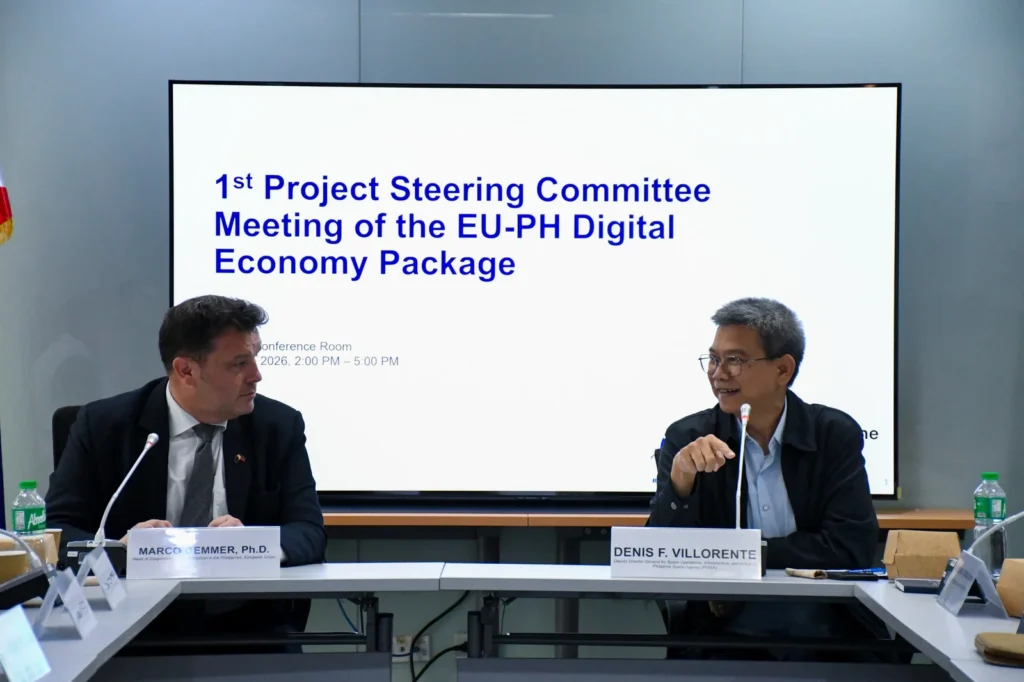
As part of the EU-Philippines Digital Economy Package, the European Union aims to strengthen not only technological infrastructure but also the institutional capabilities needed to support secure, sustainable, and effective digital development across the country.
Philippine and European Agencies Lead Implementation
The partnership was formally established in 2025 through a cooperation agreement signed by EU Ambassador Massimo Santoro and Frederick D. Go.
Implementation is being led by Philippine Space Agency and the European Union Delegation to the Philippines, together with the Department of Science and Technology, Department of Information and Communications Technology, and the Office of Civil Defense.
European partners supporting the initiative include Expertise France, Climate KIC, HAUS Finland, as well as the foreign ministries of France and Finland.
As implementation moves forward, the EU-Philippines Digital Economy Package is expected to play a key role in improving digital infrastructure, strengthening cybersecurity readiness, and expanding the use of satellite data to support national development and resilience efforts.