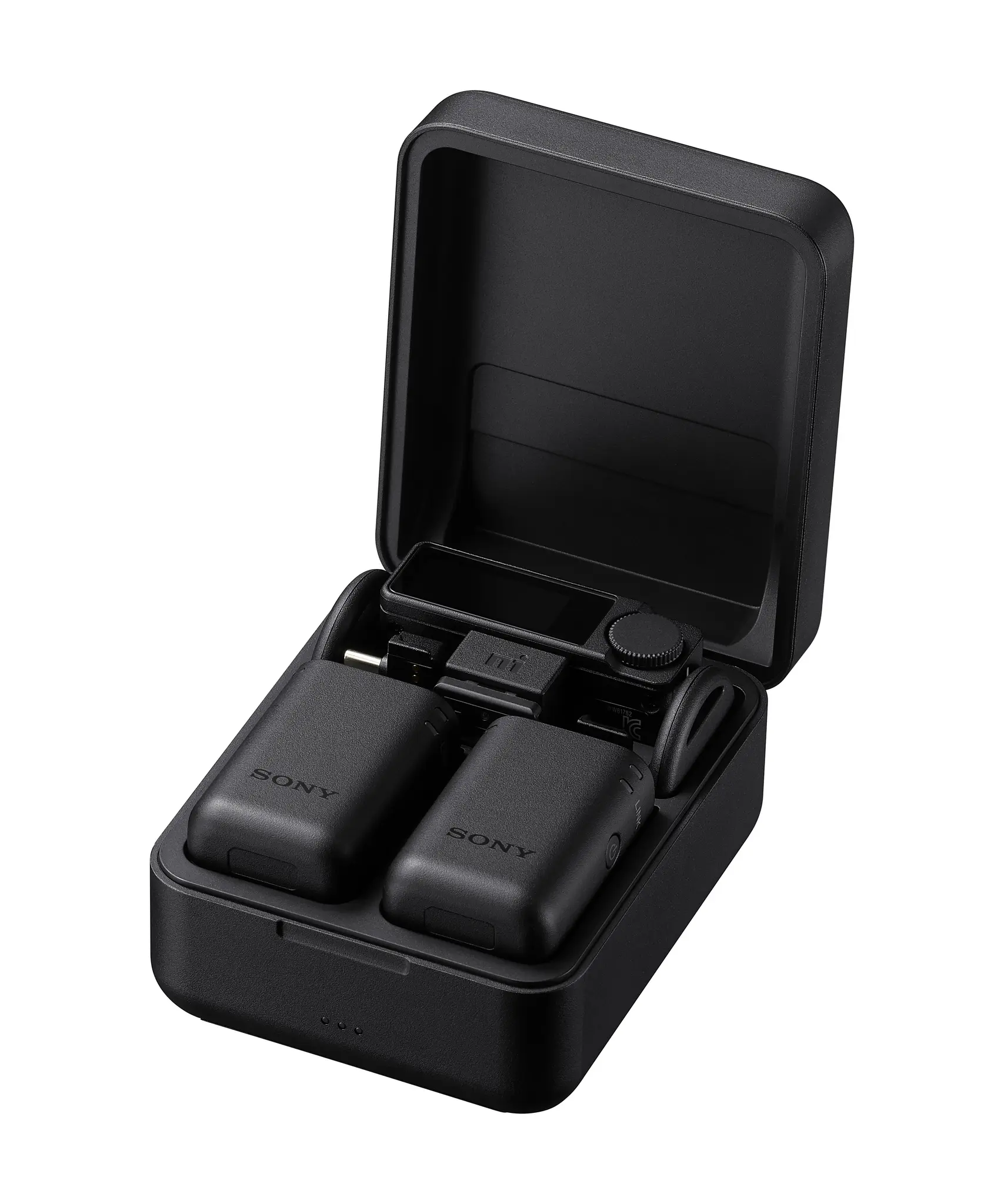
Sony has announced the Sony ECM-W5 wireless microphone, a two-transmitter system built around direct-to-camera digital recording, onboard backup storage and long-range wireless transmission. Announced for Asia Pacific on October 15, 2026, the product is aimed at video creators who need to manage dialogue and other sources without adding a separate recorder or manually synchronizing audio files later.
The central workflow claim depends on a compatible Sony camera. Connected through the company’s Multi Interface (MI) Shoe, the receiver can send 32bit float audio digitally to the camera, where it is recorded alongside video in a single file. Sony says this can remove the need for an external recorder and post-production sync work. The company notes that 32bit float recording through this route is available only at 48 kHz.
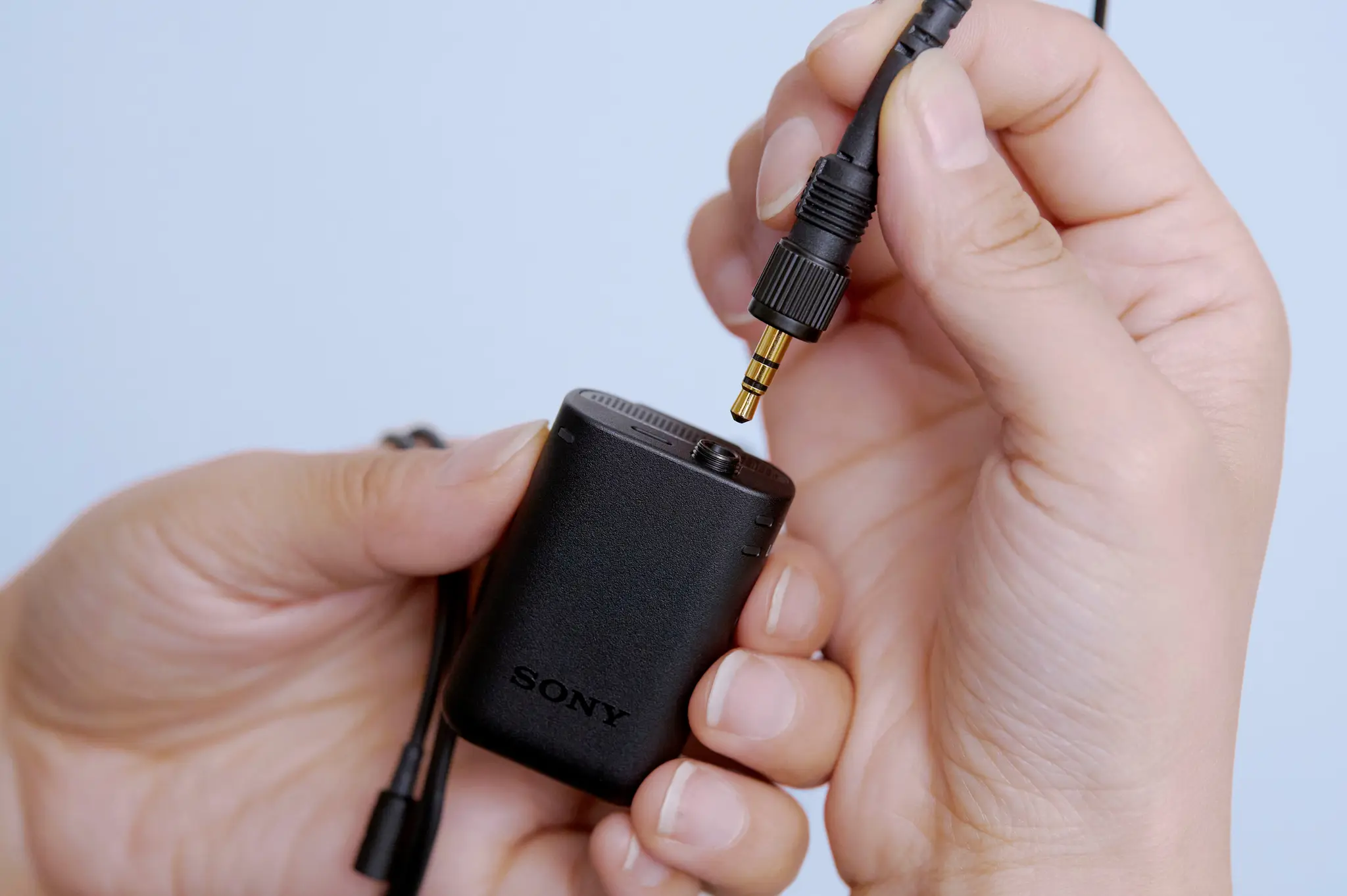
That distinction matters for buyers comparing the camera workflow with the microphone’s other recording modes. Sony says its microphones support 96 kHz High-Resolution Audio recording, while each transmitter can store backup audio in its 64 GB internal memory. Sony rates that storage for up to 90 hours at 32bit float/48 kHz or up to 60 hours at 24bit/96 kHz. A 3.5 mm input can also accept lavalier or external microphones, including Sony’s separately sold ECM-L1.
Transmission and recording limits
Sony rates the system for line-of-sight transmission of up to 500 meters, though it says the actual distance varies with surrounding and radio conditions, including obstacles and reflective surfaces. The company also says transmission is approximately three times more stable than its ECM-W3 under Sony’s internal measurement conditions. Those are manufacturer claims, not independent range or reliability results.
The 32bit float format is intended to provide more latitude when recording quiet and loud material without constant gain changes. But it is not a cure for every distortion problem: Sony explicitly says audio clipped at the microphone input stage cannot be restored by adjusting volume during editing. That caveat is useful for creators who may treat float recording as a substitute for proper mic placement and input management.
The supplied kit includes two transmitters and one receiver. Sony says the system can record up to four channels in-camera when used with the separately sold ECM-W5T transmitter, and it includes timecode functionality for synchronizing multiple cameras and audio recordings. The receiver can draw power and use linked power control through the MI Shoe on compatible cameras.

Monitoring, mobile use and local availability

The Sony ECM-W5 wireless microphone can work with compatible Sony wireless headphones for cable-free monitoring, according to Sony; certain compatible models can also serve as wireless microphone inputs. Compatibility information is to be listed by Sony. A supplied USB Type-C adapter supports smartphones and PCs that support USB Audio Class 2.0, while direct Bluetooth connection between a transmitter and a device enables wireless recording.
Sony rates the transmitters for up to 11 hours of operation and describes the design as dust- and moisture-resistant, while clarifying that it is not guaranteed to be completely dustproof or moistureproof. The Sony ECM-W5 wireless microphone will also have separately sold transmitter and receiver options for expanded configurations.
Sony Philippines has not listed a local price or release date in the announcement. Prospective Philippine buyers are being directed to official local Sony retailers for country-specific availability and pricing. For creators already using compatible Sony cameras, the key consideration is not just the quoted range: it is whether the MI Shoe, headphone and USB compatibility requirements fit the intended recording setup.