
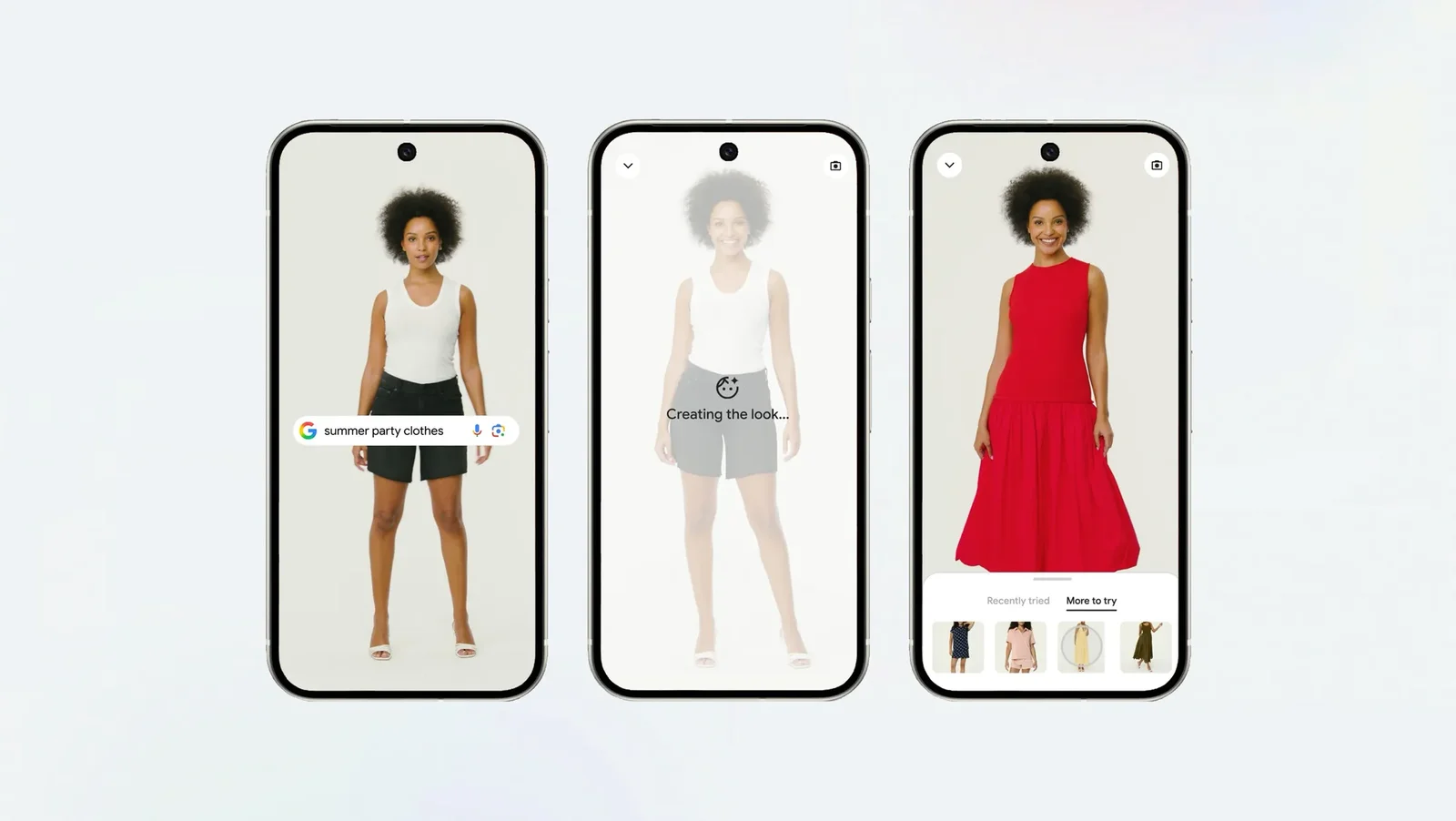
Google is making online fashion shopping more interactive with the expansion of its Try On feature, a virtual fitting tool that lets users see how clothing items may look on their own body before making a purchase. The feature is set to roll out in the Philippines in the coming weeks, further integrating AI into the e-commerce experience.
The move reflects a broader shift in online retail, where platforms are increasingly using generative AI to reduce uncertainty in purchases and improve buyer confidence, particularly in fashion categories where fit and appearance play a major role.
AI-powered virtual fitting enters Google Shopping
Google Try On allows users to upload a full-body photo and preview apparel items directly within Google Search, Google Shopping, and Google Images product listings.
The system uses a fashion-focused image generation model designed to simulate how fabrics interact with different body types, including how materials fold and drape, stretch across movement, and adapt to body shapes and poses.
Unlike static product photos or model-based previews, the tool generates a personalized visualization of how an item may appear on the user.
Google says the feature can be used across billions of apparel listings in its Shopping Graph, covering categories such as tops, dresses, bottoms, and footwear.

How the Try On feature works
Users can access the feature directly from eligible product listings by tapping the “Try it on” option in Google Shopping.
The process works by uploading a full-length photo, after which Google’s AI generates a virtual preview of the outfit. Users can then test multiple styles, colors, and variations, while saved looks can be reviewed or shared.
Purchase links ultimately redirect to merchant websites.
Google also allows users to compare multiple outfit combinations, helping shoppers make more informed decisions before checking out.
Expanding AI’s role in fashion e-commerce
The rollout of Google Try On highlights how AI is reshaping online retail experiences, particularly in fashion where return rates remain high due to sizing and fit issues.
By introducing virtual try-ons, platforms like Google Shopping aim to reduce purchase uncertainty, improve customer confidence, lower return rates for online apparel, and increase engagement within shopping platforms.
This aligns with broader industry trends where retailers, including Google, are adopting AI tools for personalization, from recommendation engines to virtual fitting rooms.
Bridging the gap between online and in-store shopping
Google positions Try On as a way to replicate the confidence of in-store fitting rooms in a digital environment. In physical retail, shoppers can immediately assess fit and style, something that online shopping has traditionally struggled to replicate.
With AI-powered visualization, users can now preview outfits in a more personalized context before committing to a purchase.
The feature also strengthens Google’s position in AI-driven commerce, integrating shopping, search, and generative AI into a unified experience that blends discovery with decision-making.
As the rollout reaches more markets, including the Philippines, the feature signals a broader shift toward immersive and interactive online shopping powered by AI.