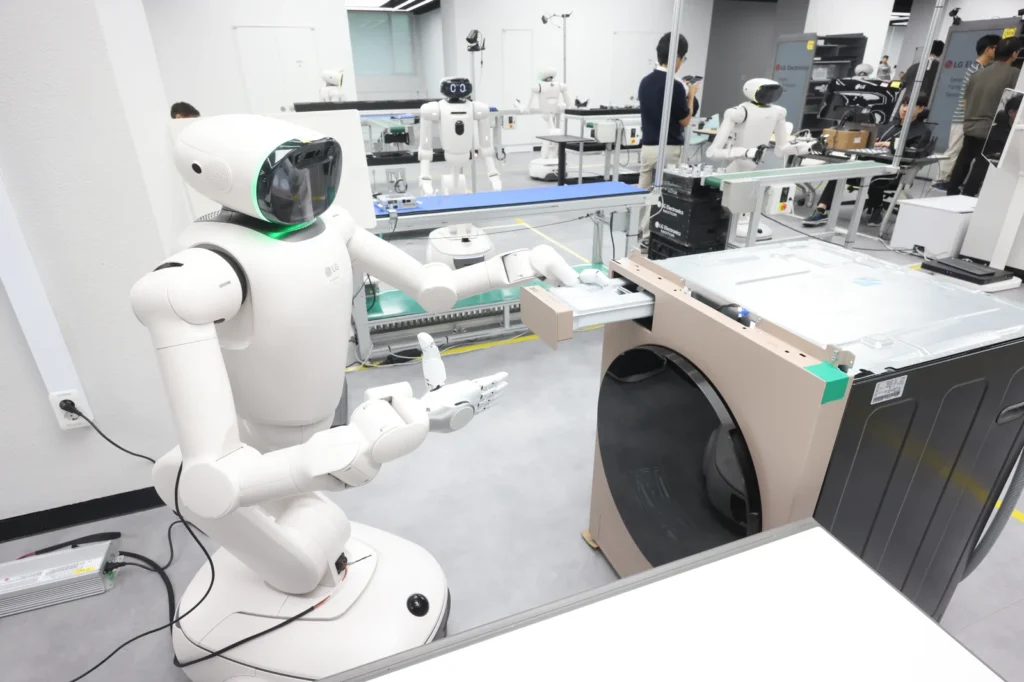
LG Electronics is expanding its robotics ambitions with a new 10,000-square-meter Data Factory in Seoul, where hundreds of robots will perform household, manufacturing, and logistics tasks to generate training data for future robotic systems.
The facility, being built at LG’s Yangjae R&D Campus, will combine LG’s manufacturing and logistics expertise with NVIDIA’s robotics technologies to help robots learn through repeated real-world practice and simulated environments.
LG expects the facility to be fully operational by the end of 2026, with several hundred robots generating, collecting, and validating data for the company’s broader push into physical AI and robotics.
LG’s Data Factory will train robots through real-world tasks
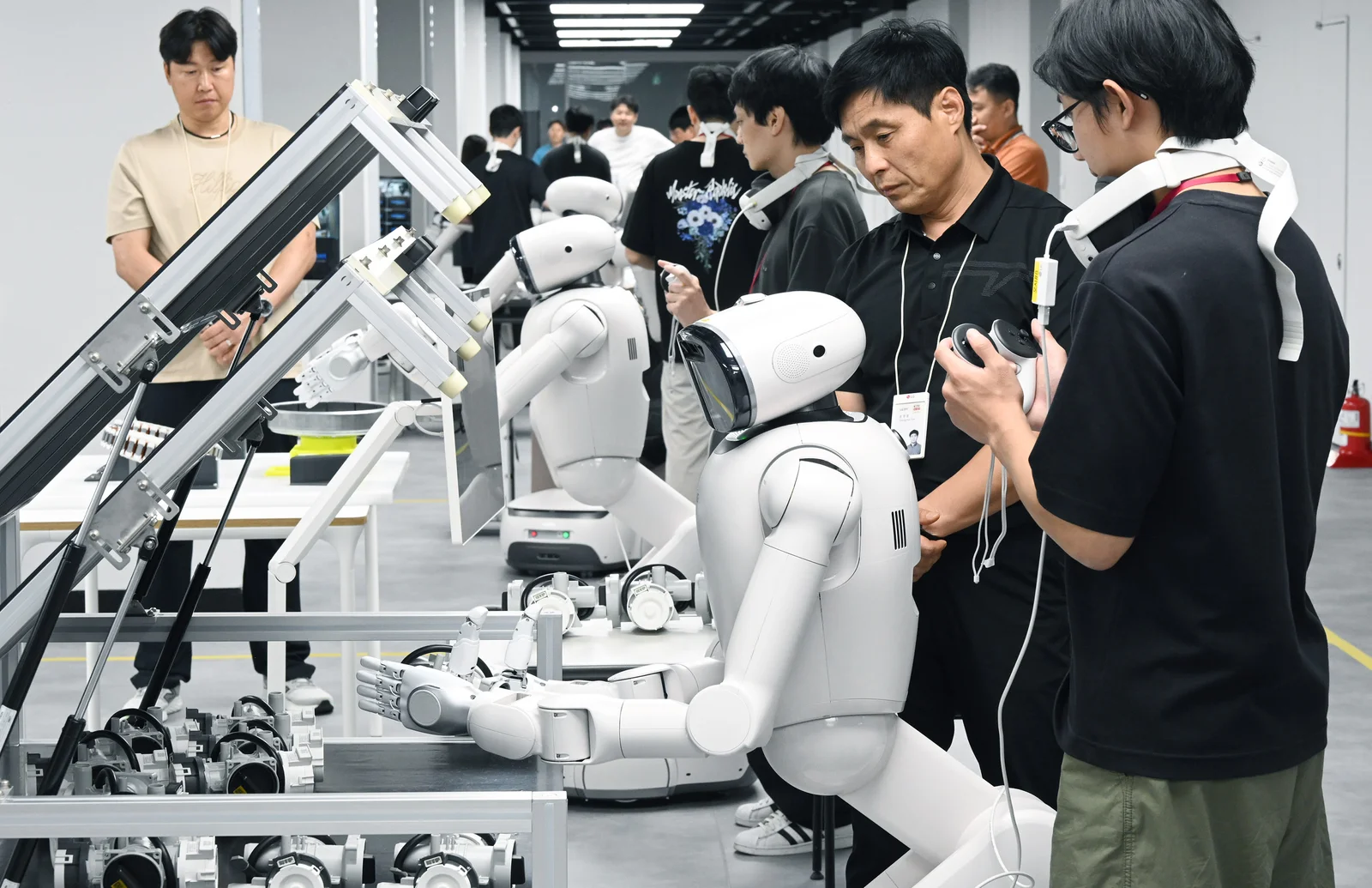
The Data Factory is designed to function as more than a conventional robotics testing facility. It will provide controlled environments where robots can repeatedly perform tasks and generate data that can be refined for future training.
One area replicates a home environment, where LG CLOiD home robots practice cleaning tasks. Another recreates parts of LG’s washing machine manufacturing operation in Tennessee, allowing robots to practice moving, stacking, and assembling components.
LG is also deploying robots for logistics automation through LG CNS, while LG Innotek will use a separate area to train robotic hands.

The resulting data can then be used to improve subsequent robot training, creating what LG describes as a “data flywheel” in which new data continuously feeds the development and improvement of robotic systems.
NVIDIA technologies will expand LG’s robot training data
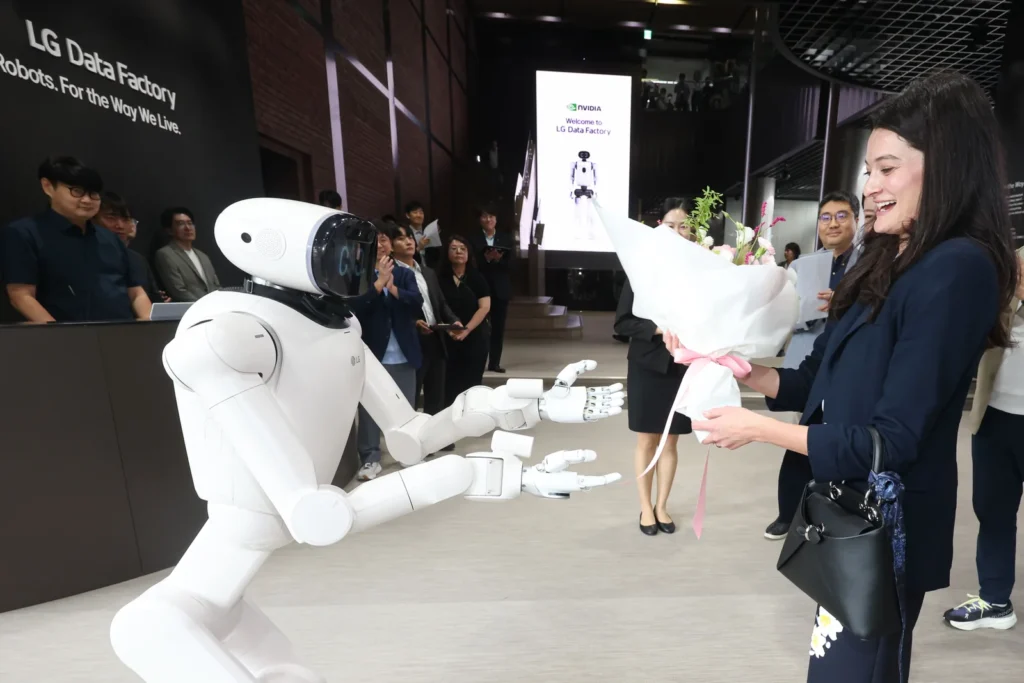
LG is integrating the Data Factory with NVIDIA’s physical AI ecosystem, including NVIDIA Omniverse libraries, NVIDIA Cosmos open world models, and the NVIDIA Isaac robotics development platform.
The combination allows LG to work with both physical data collected from robots and synthetic or augmented data generated through simulation.
By the end of 2026, LG expects the Data Factory to produce a total of 100,000 hours of training data when directly collected data is combined with synthetically generated and augmented data. LG says that volume is equivalent to roughly 12 years of data.
The company plans to use the resulting dataset to advance its Robot Foundation Model (RFM), which serves as a foundation for the capabilities of its humanoid robots.
LG is turning manufacturing expertise into a robotics advantage
The Data Factory also gives LG an opportunity to apply data accumulated through decades of manufacturing and logistics operations to robot development.
Rather than developing robotics systems independently from its existing operations, LG can draw from real-world environments, manufacturing processes, logistics systems, and home appliances deployed around the world.
This approach could become increasingly important as robotics companies move beyond hardware development and compete on the data, models, and software needed to make robots useful in unpredictable physical environments.
LG expands robotics push with dedicated business center
The Data Factory comes as LG makes robotics a larger part of its corporate strategy. The company has designated 2026 as the starting point of its robotics business push and established a dedicated Robotics Business Center that reports directly to the CEO. LG already operates in industrial and commercial robotics but plans to expand further into home robotics.
The company is combining its manufacturing capabilities with experience developing robotic components such as actuators and the robot-learning data generated through the Data Factory.
LG Electronics CEO Lyu Jae-cheol said the company plans to combine capabilities across the LG Group with partnerships with global technology companies as it develops its physical AI business.
LG and NVIDIA deepen their robotics partnership
The Data Factory collaboration follows a memorandum of understanding signed by LG Group and NVIDIA on August 13 in Santa Clara, California, covering strategic cooperation on future business initiatives.
Just four days later, senior executives from LG Electronics and other LG Group affiliates met with NVIDIA officials at the Seoul facility to discuss the partnership and potential areas for further collaboration. The rapid follow-up highlights the companies’ focus on moving their cooperation toward practical robotics applications and eventual commercialization.
For LG, the longer-term goal is to move from supplying individual robotic products toward becoming a broader robotics solutions provider, combining hardware, software, components, data, and AI models across industrial, commercial, and household applications.