
LG Electronics has launched its 2026 Life’s Good campaign, focusing on how AI can reduce the mental load of everyday responsibilities rather than simply helping people become more productive.
Under the message “Free up your mind,” the campaign explores how technology can quietly handle routine demands, giving people more room to focus on rest, relationships, and spontaneous moments.
The campaign marks the fourth year of LG’s Life’s Good initiative and builds on the company’s broader Affectionate Intelligence approach to AI.
LG’s Life’s Good campaign targets everyday mental load
LG’s research found that people experience an average of 27 mental-load interruptions during their waking hours, with the cumulative burden equivalent to around 87 days each year.
The company describes mental load as the constant stream of information, small decisions, household responsibilities, and other demands that can occupy people’s attention even when they are supposed to be resting.
The impact extends beyond inconvenience. According to the survey, 51% of respondents said mental load affects their sleep, while 49% said it affects their physical health.

Household responsibilities remain a major source of stress

The study also found that unpaid responsibilities at home contribute more to mental load than paid work, highlighting the potential role of household technology in reducing some of that burden.
Nearly 73% of respondents said the right household technology could help reduce their mental load. Respondents showed the strongest interest in solutions capable of proactively handling routine tasks without requiring constant attention.
That distinction is important as manufacturers increasingly integrate AI into appliances and connected-home ecosystems. Instead of asking users to interact with another AI tool, LG’s approach centers on technology working in the background.
LG puts AI into everyday household experiences
The campaign’s hero film follows a family stepping away from the pressures of everyday life for an evening, highlighting ordinary moments such as conversations, shared meals, and simply being present.
LG extends the concept through product-focused films featuring the LG WashTower, LG Styler, LG OLED, and LG DUALCOOL.
The products are presented as examples of how technology can take care of routine household demands, allowing users to spend less attention managing everyday tasks.
LG is also introducing an interactive experience where users can answer questions about their own mental load and identify some of the factors contributing to it.
From productivity to giving people time back
The campaign takes a different approach from the usual AI narrative centered on productivity and doing more in less time.
LG’s research found that when people imagined having less mental load, they were more likely to describe simple personal activities than additional achievements. Reading a book, spending unplanned time with loved ones, and enjoying moments without everyday responsibilities emerged as examples.
Dr. Judith Joseph, a board-certified psychiatrist and 2026 TIME100 Creator, linked the constant weight of unshared domestic responsibilities to emotional exhaustion.
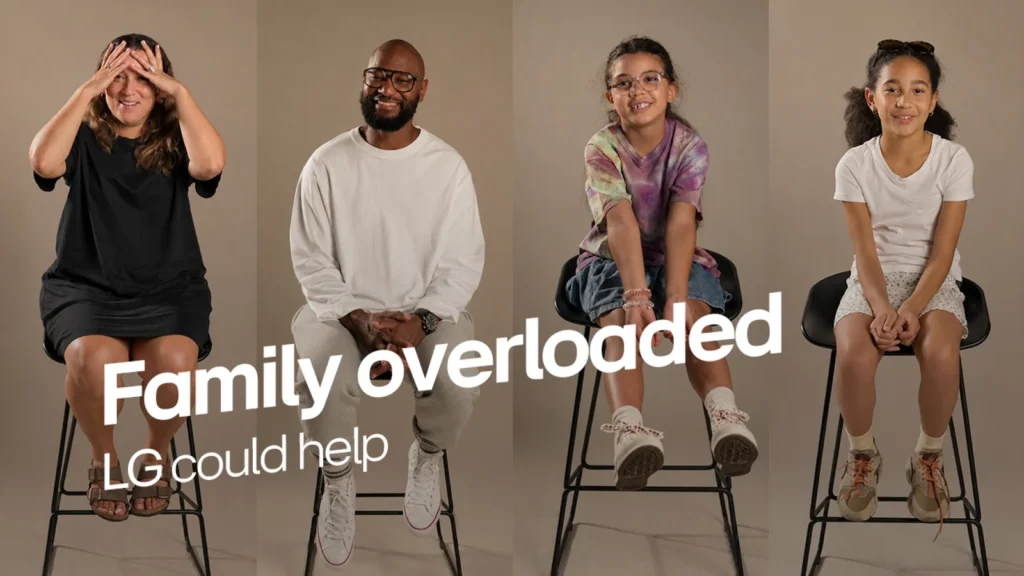
For LG, this reinforces the idea behind Affectionate Intelligence: AI should be designed around people’s needs and reduce friction rather than create another layer of technology they have to manage.
LG continues its Life’s Good campaign
The 2026 campaign follows LG’s previous Life’s Good films, including “We don’t make life good, you do” in 2024 and “Less artificial. More human” in 2025.
This year’s campaign continues that human-centered direction by focusing on one increasingly common problem: the difficulty of switching off from everyday responsibilities.
With “Free up your mind,” LG is positioning AI less as a tool for squeezing more productivity out of people’s day and more as technology that can quietly take care of routine demands.
The broader message is simple: as AI becomes increasingly embedded in household technology, its value may ultimately be measured not by how much more people can do, but by how much attention it gives back.