For years, conversations around artificial intelligence in consumer tech have focused on smartphones, chatbots, and software. But at TCL’s newly inaugurated Guangzhou Smart Manufacturing Base, AI is being used somewhere less visible—inside the factory floor itself.
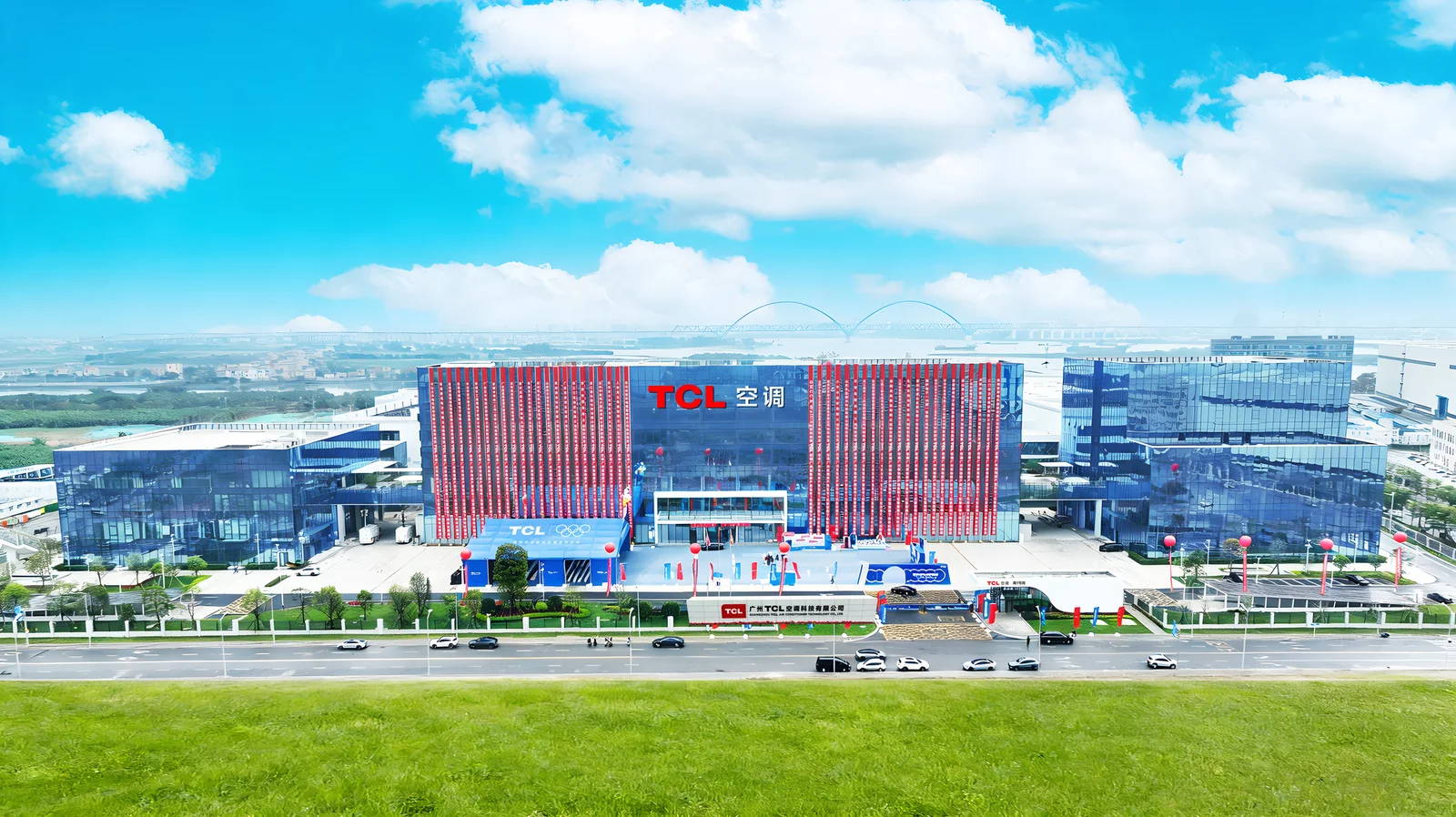
The company officially opened the new air conditioner manufacturing hub in Nansha, Guangzhou. It both marked the launch of the facility and a larger milestone of 100 million TCL air conditioners produced in just five years.
More than a production expansion, the facility reflects how appliance manufacturing is increasingly becoming a testbed for automation, AI coordination, and zero-carbon industrial systems.
A factory built around speed, automation, and AI coordination
TCL describes the Guangzhou Smart Manufacturing Base as the largest single-base intelligent air conditioner manufacturing facility in China’s Greater Bay Area.
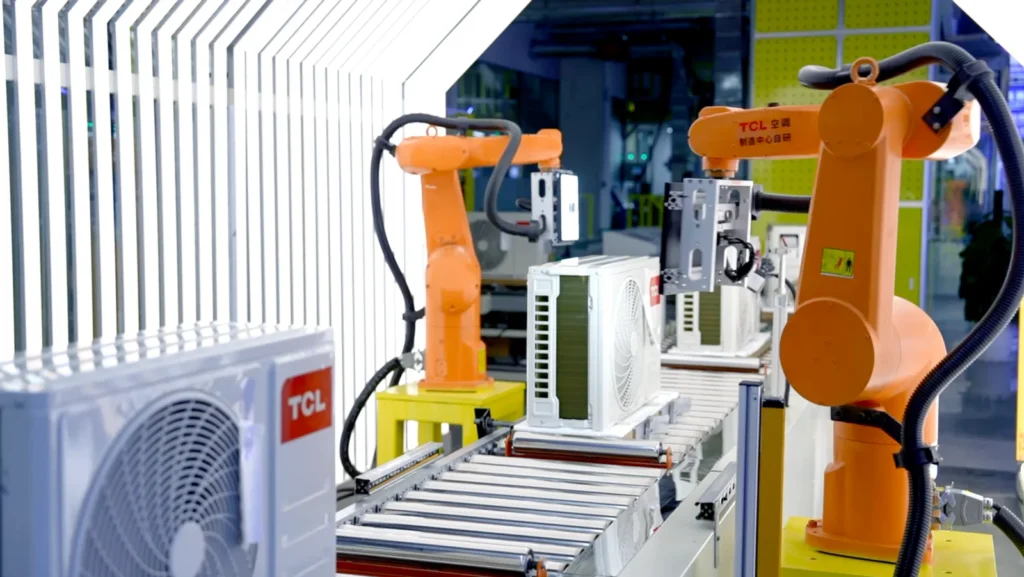
The site spans three fully flexible “dark factories”—highly automated production environments designed to operate with minimal human intervention. According to TCL, the facility can produce one air conditioner every seven seconds.
That pace is supported by a supercomputer-driven production system capable of processing data from 17,000 IoT sensors while coordinating more than 2,000 AI agents in real time.

Instead of relying on isolated automation lines, TCL is positioning the plant as a connected AI manufacturing ecosystem where machines continuously analyze, adjust, and optimize operations on their own.
The company says the facility will eventually target more than 10 billion yuan in output value within the next five years while helping generate over 10,000 jobs across its broader supply ecosystem.
The shift from “smart appliances” to “smart manufacturing”
Consumer electronics brands have spent years marketing “smart” products inside homes. Their latest push suggests the next competitive advantage may come from how those products are built in the first place.
The factory includes AI-assisted heat exchanger production lines, fully robotic evaporator and condenser manufacturing, real-time energy allocation systems, and automated logistics and scheduling operations. TCL says its AI-enhanced production system improved labor efficiency by over 40% while enabling round-the-clock unmanned operations for key components.
The approach mirrors a broader trend across global manufacturing, where AI is increasingly used not only for product features but for supply chain coordination, predictive maintenance, and production optimization.
A zero-carbon direction for appliance production
Alongside automation, TCL is heavily emphasizing sustainability at its Guangzhou base. The facility incorporates 50,000 square meters of photovoltaic coverage and energy storage systems managed through AI-based energy scheduling. TCL says the system generates nearly 7 million kWh annually while reducing standard coal consumption by over 2,000 tons per year.
The site also integrates near-zero waste management systems covering exhaust gas purification, water recycling, solid waste reduction, and intelligent environmental monitoring.
Rather than treating sustainability as a separate initiative, TCL positions the factory itself as a “digital intelligence + zero carbon” industrial model.
The bigger picture: TCL wants to compete beyond products
The launch also signals TCL’s broader ambitions in the global appliance industry.
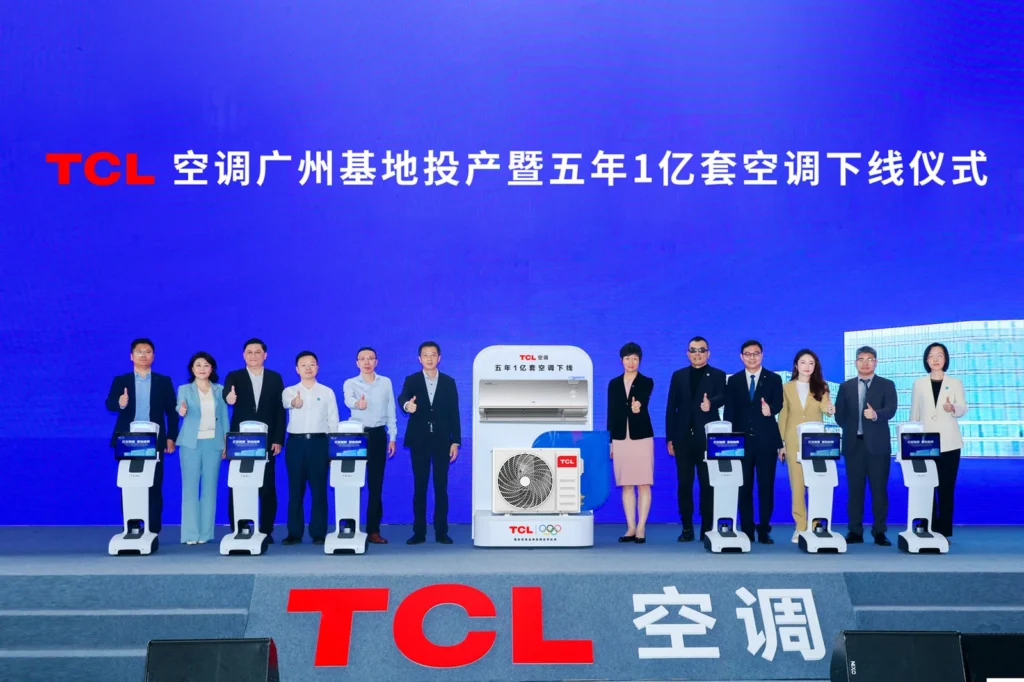
The company says its air conditioner business now reaches over 160 countries and regions, with annual production capacity exceeding 38 million units. TCL also claims top-tier positions in global air conditioner exports and sales volume.
But the company’s messaging increasingly centers around ecosystem capabilities rather than standalone products. Its FreshIN AI air conditioner lineup, for example, focuses on AI-powered sleep tracking, comfort adjustment, and air management systems that adapt dynamically to users’ environments.
The Guangzhou facility becomes part of that larger strategy—not just manufacturing appliances faster, but building the infrastructure behind AI-driven home ecosystems.
Manufacturing becomes part of the brand story
Factories rarely become headline products for consumers. But in industries increasingly shaped by AI, sustainability, and supply chain resilience, manufacturing itself is starting to become a competitive differentiator.
With the Guangzhou Smart Manufacturing Base, TCL is making the production process part of its technology narrative—positioning the factory not simply as infrastructure, but as proof of where the company believes the future of smart appliances is heading.