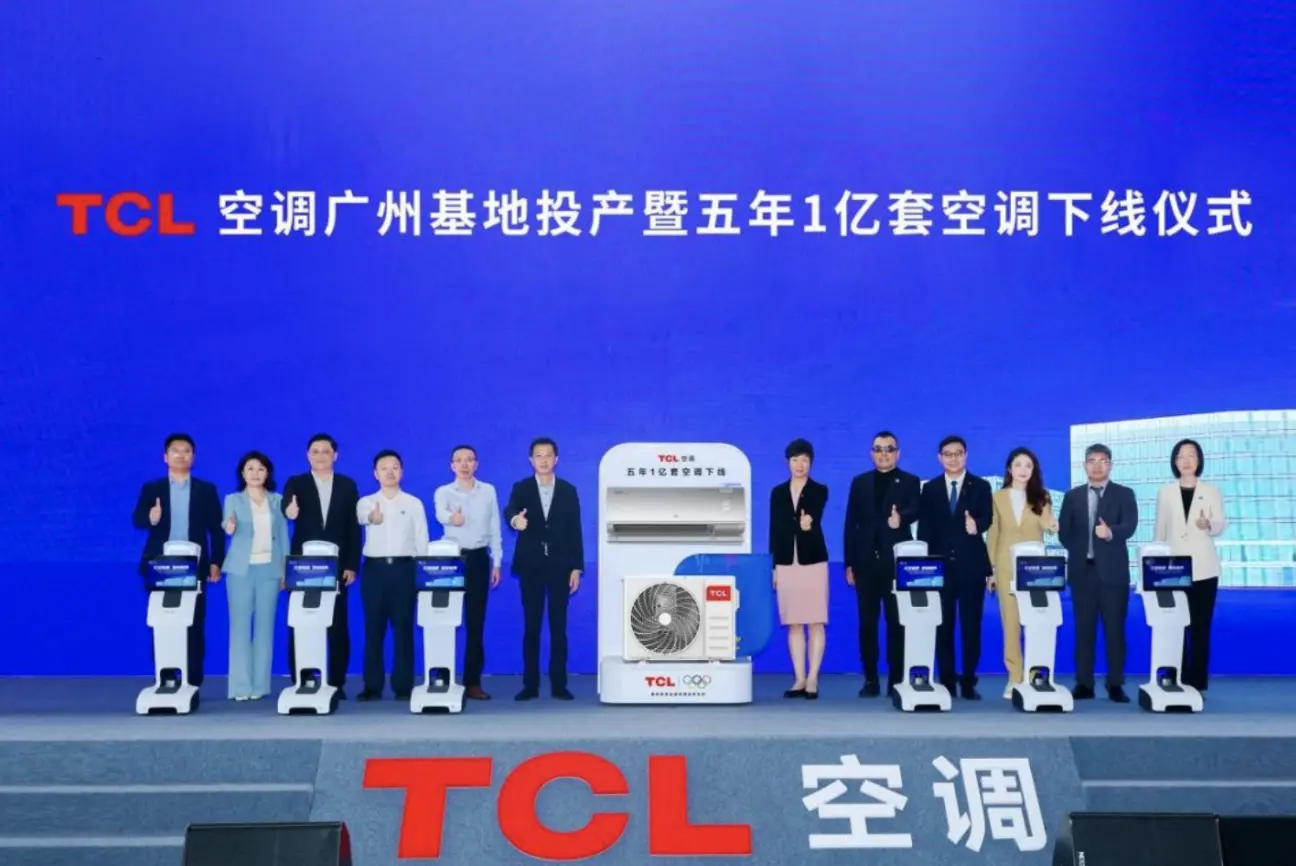
TCL says it sold 100 million air conditioners over the past five years as the company highlighted its global exports, component development and manufacturing operations. The announcement places TCL air conditioner technology at the center of its account of how the brand is building a position in the international market.
According to data from Industry Online cited by TCL, its air conditioner production and sales volume reached 22 million units in 2025. The company ranked No. 2 globally in air conditioner exports from China and recorded the highest growth rate among the top three exporters, according to the same source.

TCL also said its air conditioners ranked first in shipments in the Philippines, Argentina, Panama and Algeria. The brand ranked second in the United States, Brazil, Italy, Spain, Nigeria and South Korea. Its products are exported to more than 100 countries, while the company says it has maintained continuous positive growth for the past decade.
The Philippines is therefore among the markets named in TCL’s global shipment performance claims. The supplied announcement does not identify specific models, prices or local availability, but it places the country within the brand’s reported international distribution footprint.
Components and smart-air features
TCL says it is one of the few companies in China capable of independently developing inverter controllers, which regulate the operation of an air conditioner’s compressor and related systems. It also operates its own compressor factory and says it independently develops and manufactures core components for residential air conditioners.
The company identifies Smart Blue Wing as the technology engine behind its product strategy. TCL says the system uses a full-link artificial intelligence architecture covering perception, cognition, decision-making and service. Its stated purpose is to detect factors such as movement, airflow and air quality, then adjust the indoor environment.

The announcement lists four core features:
- AI SleepEye, which uses millimeter-wave radar and genetic algorithms to detect sleep movement and create personalized cooling curves.
- AI Human Sensor, which tracks body position and adjusts airflow based on distance.
- AI Healthy Fresh Air, which monitors indoor air quality and performs whole-house air exchanges without opening windows.
- Smart Gentle Breeze, which diffuses cold drafts into softer airflow.
TCL groups these capabilities into three product series: AI Healthy Fresh Air, AI Healthy Comfort and AI Energy-Saving. The company says the series address respiratory health, whole-house comfort and daily operating costs. These descriptions are company claims; the source does not provide independent test results or comparative performance data.
Manufacturing scale
TCL air conditioner technology is supported, the company says, by manufacturing systems at its Guangzhou Smart Manufacturing Base. TCL reports that an air conditioner comes off the production line every seven seconds. The facility’s AI Data Super-computing Center is described as having capacity for 30 quadrillion operations per second and collecting data from 17,000 Internet of Things sensors.

The base also includes what TCL describes as the industry’s only AI-powered ultra-high-precision heat exchanger production line. According to the company, automated production improved labor efficiency by 41.7 percent. Three lights-out factories support unmanned production across heat exchanger, piping and injection molding workshops.
TCL says these systems support delivery across more than 160 countries. Its reported sales, export ranking, component capabilities and manufacturing figures form the company’s case for TCL air conditioner technology. The source does not include independent verification of those claims.