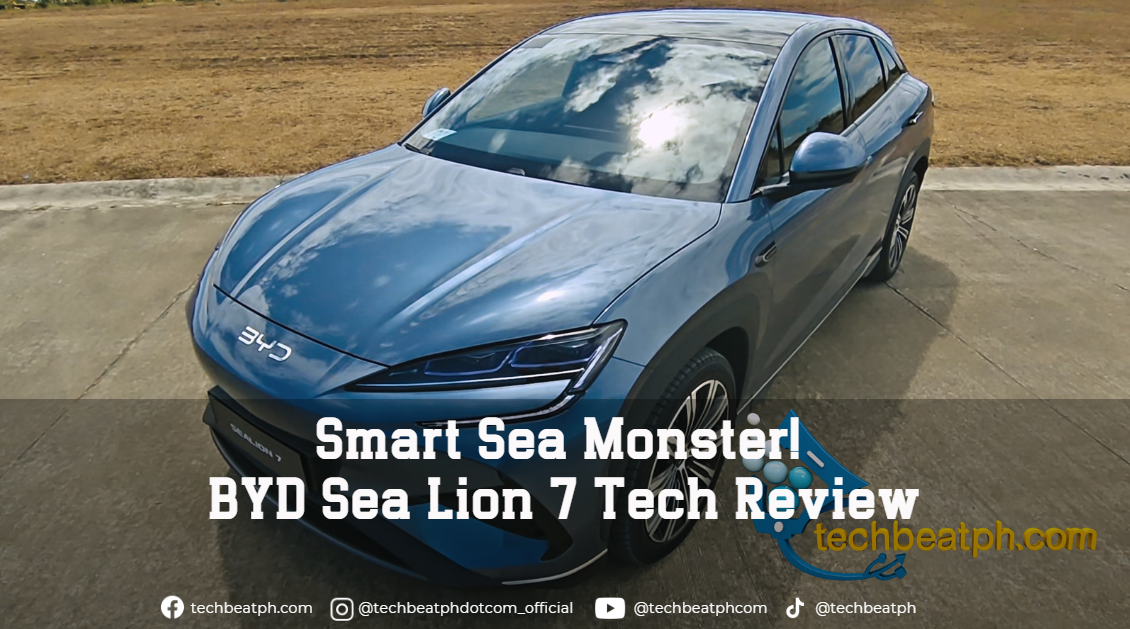
Are you tired of electric SUVs that promise “smart” features but deliver nothing more than a glorified tablet glued to the dashboard? In modern automotive journalism, the word “smart” has been diluted into a lazy marketing buzzword used to mask mediocre engineering. True intelligent electric crossover isn’t measured by the number of streaming apps on your touchscreen—it is proven by the thermal physics under the cabin floor, high-voltage electrical efficiency, and structural component integration.
Today, we are putting this true intelligent electric crossover through the rigorous TechBeatPH forensic hardware review process. We skip the generic dealership talking points and dive straight into the underlying silicon, battery architecture, and high-performance engineering to see if this vehicle is a genuinely intelligent machine or just riding a wave of digital hype.
Under the Skin: e-Platform 3.0 Evo and CTB Architecture
At TechBeatPH, we evaluate structural design before looking at interior luxury. BYD has engineered a true intelligent electric crossover around their advanced e-Platform 3.0 Evo architecture. The most critical hardware triumph here is the execution of Cell-to-Body (CTB) technology. Traditional electric vehicle manufacturing drops an independent, heavily insulated battery pack into a gap within a separate chassis frame cage. BYD completely discards this fragmented approach.
The high-safety LFP Blade Battery is integrated directly into the structural frame of the vehicle. The top cover of the battery assembly serves as the actual structural floor of the passenger cabin, surrounded by a high-strength, honeycomb-like aluminum matrix. From a pure engineering perspective, this layout provides two massive structural advantages:
-
Torsional Stiffness: Using the battery pack as a stressed member of the chassis drastically elevates the vehicle’s torsional rigidity. This eliminates structural body flex during aggressive cornering or rapid lane changes.
-
Packaging Efficiency: Removing the traditional dual-floor layout lowers the physical center of gravity while maximizing vertical interior legroom. It maintains a low, aerodynamic fastback silhouette without forcing occupants into a cramped seating posture.
This robust structural platform works in tandem with a premium suspension arrangement consisting of double wishbones at the front and a five-link independent suspension at the rear. Equipped with mechanical Frequency Selective Damping (FSD) shock absorbers, the chassis adapts to road surface frequencies in real time. It stiffens to provide firm stability on smooth highways, then instantly softens to absorb jarring impacts when navigating jagged urban potholes.
Powertrain Dynamics and Thermal Optimization
Under maximum load, the all-wheel-drive variant of the Sea Lion 7 generates a staggering 530 horsepower (390 kW) and 690 Nm of torque. This pushes the 2.3-ton crossover from 0 to 100 km/h in an absolute blink-and-you-miss-it 4.5 seconds. What makes this sustained performance possible is a distinct breakthrough in building a true intelligent electric crossover: a rear permanent magnet synchronous motor that can rev up to an astonishing 23,000 RPM. By utilizing specialized dual V-shaped magnets and a flat wire winding system with a 92% slot-fill rate, the motor maximizes magnetic flux density while preventing performance drop-off at higher speed thresholds.
But raw power means absolutely nothing if your thermal architecture cannot reject heat efficiently under sustained workloads. To address this, the vehicle relies on an innovative 8-in-1 electric powertrain system. This system tightly packages the vehicle control unit (VCU), battery management system (BMS), motor control unit (MCU), power distribution unit (PDU), DC-DC controller, on-board charger, drive motor, and transmission into a single, compact structural housing.
This high vertical integration interfaces directly with a standard, high-efficiency composite heat pump system. Rather than draining the primary 82.6 kWh battery pack to regulate cabin temperatures, the heat pump aggressively scavenges residual thermal energy from the ambient surroundings, the powertrain electronics, and the passenger compartment. This meticulous energy recycling loop drastically reduces power consumption, preserving vital battery range during highway cruising or extreme weather conditions. When it is time to recharge, top-spec models support rapid DC fast charging up to 230 kW, enabling a 10% to 80% capacity top-up in just 24 minutes.
The Intelligent Cockpit and DiPilot ADAS
Stepping inside reveals a tech-forward sanctuary centered around a signature 15.6-inch ultra-HD floating center pad that physically rotates between portrait and landscape orientations at the touch of a single digital button. Powered by a responsive high-tier processor chipset, the user interface handles four-zone voice commands and seamless phone mirroring without a hint of visible latency.
On the open road, safety functions are governed by the comprehensive DiPilot advanced driver-assistance system (ADAS) suite. This safety network relies on a sophisticated array of sensors and high-definition 360-degree cameras featuring a clear “see-through” vehicle visualization mode.
Safety System Integration: Features like Adaptive Cruise Control, Lane Keeping Control, Blind Spot Detection, and Front and Rear Cross Traffic Alert with active braking function with remarkable precision, stepping in subtly to prevent potential collisions without delivering the jarring, overly sensitive audio chimes that ruin the premium driving experience.
For professional media teams or outdoor enthusiasts, the inclusion of a standard Vehicle-to-Load (V2L) adapter allows the vehicle to act as a high-output mobile power bank, pushing electricity out to charge heavy production equipment, laptops, or field gear directly from the charging port.
My Take: The TechBeatPH Gold Rating
The electric crossover market is currently saturated with vehicles that look futuristic on the surface but rely on fragmented, unoptimized component architectures underneath their sheet metal. The BYD Sea Lion 7 completely refuses to play that game. By treating the vehicle as a unified piece of high-performance computing and mechanical hardware—where the battery structure is the frame, the power electronics are tightly integrated, and the thermal loops are completely recycled—they have built a remarkably efficient, robust daily driver.
It handles beautifully, charges incredibly fast, and eliminates the typical daily creative and operational friction of modern travel. For masterfully executing flagship-level electrical engineering in a true intelligent electric crossover, the BYD Sea Lion 7 earns the official TechBeatPH Gold Rating.