
YouTube’s New Tools for Teens and Families in 2026
Screen Time Management: Technology Meets Parenting
YouTube has rolled out a set of new features designed to help families manage how teens spend their time online. At the center of this update is the Shorts Timer, a first-of-its-kind tool that allows parents to control how long their children watch short-form content. YouTube’s New Tools for Teens and Families in 2026
Parents can set the timer to zero when it’s time for homework, then adjust it to 60 minutes during downtime like a long car ride. Soon, they’ll even have the option to set the limit to zero permanently. This is a big deal because short-form content is addictive by design. Algorithms feed endless clips, and before you know it, hours are gone.
I’ve always said tech should empower parents, not overwhelm them. For readers, this means you now have a digital lever to balance entertainment and responsibility. And yes, it also means you can stop saying, “I can’t control my kid’s screen time.”
Bedtime and Break Reminders: Health Built Into the System
YouTube is also expanding its supervised account features with customizable Bedtime and Break reminders. These build on existing health protections to ensure teens get enough rest.

Parents can set reminders that nudge kids to log off at night or take breaks during marathon viewing sessions. It’s a subtle but important way to integrate wellness into digital habits.
I’ve always argued that tech should care about health as much as engagement. For readers, this means YouTube is giving you tools to protect sleep and sanity. And yes, it also means you can stop saying, “My teen never knows when to stop watching.” YouTube’s New Tools for Teens and Families in 2026
YouTube’s New Tools for Easier Account Switching: Personalized Experiences for Families
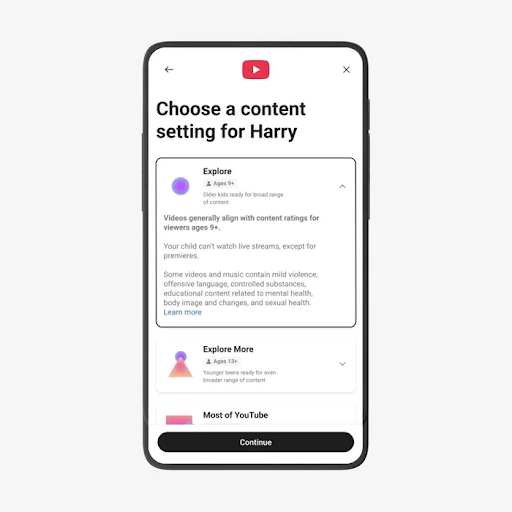
In many Filipino households, devices are shared among siblings and parents. YouTube is addressing this reality with easier account switching. Soon, parents will be able to create accounts for their children and switch between them in the mobile app with just a few taps. YouTube’s New Tools for Teens and Families in 2026
This ensures that each family member gets a personalized viewing experience, with content settings and recommendations suited to their age.
I’ve always said personalization is the future of digital platforms. For readers, this means your child won’t be bombarded with content meant for adults, and you won’t be stuck with recommendations for cartoons. And yes, it also means you can stop saying, “Sharing devices ruins my feed.”
A Blueprint for High-Quality Content
YouTube isn’t just focusing on controls—it’s also curating content. The platform has launched new principles and guidelines for creators, developed in collaboration with experts like the American Psychological Association (APA) and the Digital Wellness Lab at Boston Children’s Hospital.
These guidelines help YouTube’s systems prioritize educational and inspiring videos. Channels like Khan Academy, CrashCourse, and TED-Ed will get more visibility, ensuring teens find a balance between entertainment and learning.
I’ve always argued that algorithms should elevate quality, not just popularity. For readers, this means your teens are more likely to stumble upon content that teaches, inspires, and entertains responsibly. And yes, it also means you can stop saying, “YouTube is just mindless videos.”
Protecting Children Within the Digital World
Jennifer Flannery O’Connor, YouTube’s Vice President of Product Management, summed it up: “We believe in protecting children within the digital world, not from the digital world.”
That statement matters. It acknowledges that kids are already online, and the solution isn’t to block access but to build safeguards. YouTube has spent over a decade tailoring protections based on feedback from parents and experts.
I’ve always said the digital world isn’t going away—it’s evolving. For readers, this means YouTube is adapting to reality, not pretending kids can be kept offline. And yes, it also means you can stop saying, “The only safe option is no internet.”
YouTube’s New Tools for Technology as a Parenting Ally
The bigger story here is how technology is becoming a parenting ally. Features like timers, reminders, and account switching aren’t flashy—they’re practical. They give parents control without requiring them to be tech experts.
This is important because digital parenting is one of the toughest challenges today. Kids are digital natives, parents are playing catch-up, and platforms often prioritize engagement over well-being. YouTube’s updates show a shift toward balance.
I’ve always argued that tech companies should design with families in mind. For readers, this means you don’t have to fight the algorithm alone—you’ve got tools on your side. And yes, it also means you can stop saying, “Parenting in the digital age is impossible.”
My Take: Practical Innovation That Benefits Families
I’ve covered countless platform updates, and most are cosmetic. YouTube’s new tools feel different because they tackle real problems: screen time, sleep, personalization, and content quality.
What I like most is the practicality. These aren’t features designed to impress investors—they’re built to help families. They acknowledge the realities of shared devices, addictive content, and the need for balance.
For readers, the benefit is clear: YouTube is evolving into a safer, smarter space for teens and families. And yes, it also means your next family argument about screen time might finally have a solution.