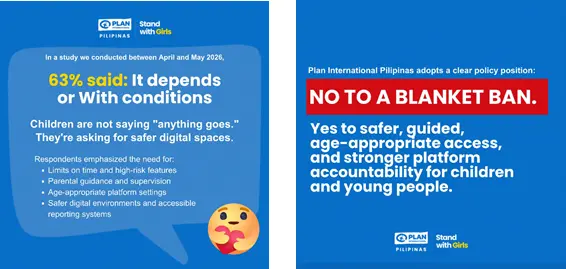
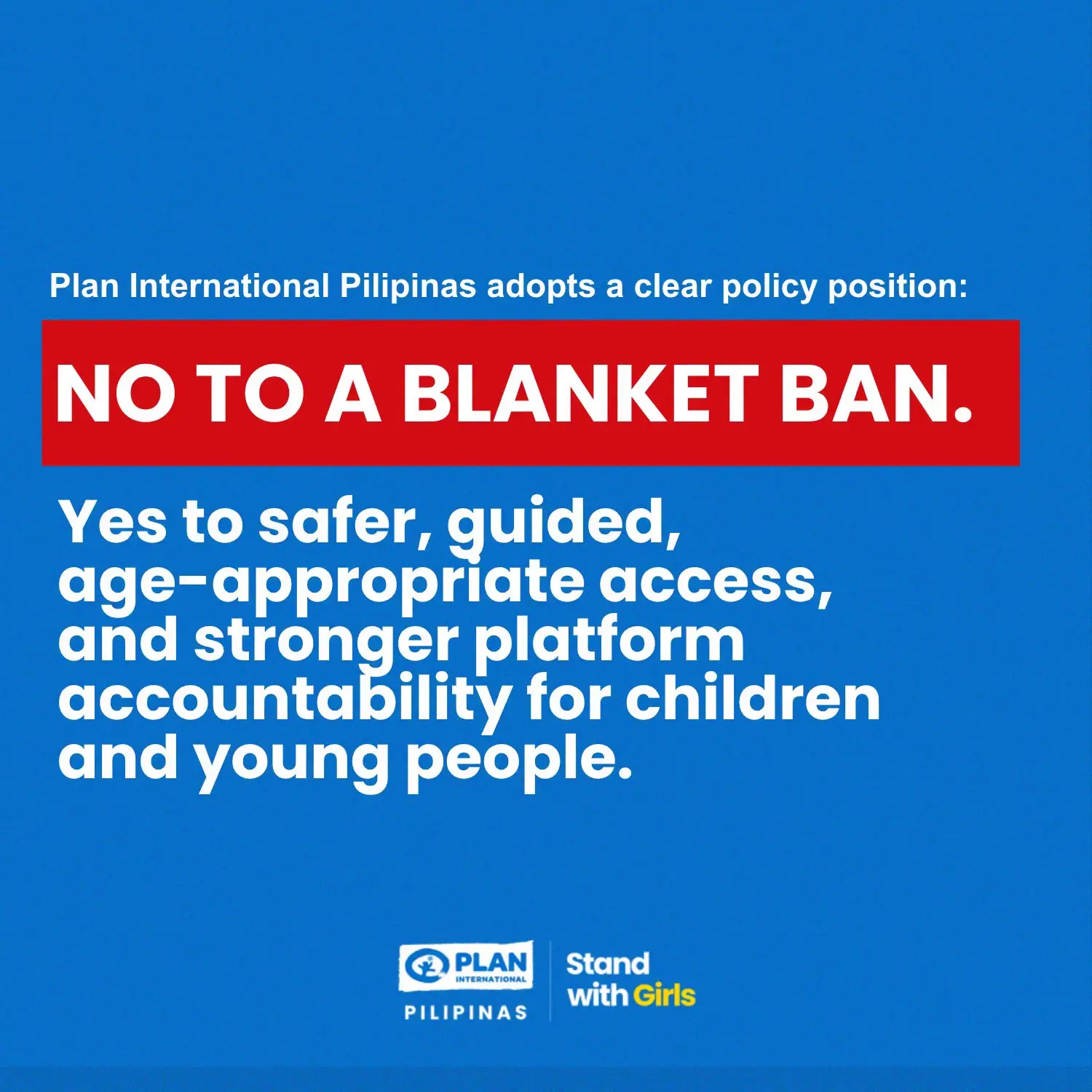
Plan International Pilipinas says its 2026 consultations and earlier assessment show that young Filipinos online safety concerns are paired with support for continued access to digital platforms for learning, communication and connection. Rather than blanket restrictions, respondents pointed to age-appropriate safeguards, parental guidance, safer digital environments and stronger accountability from technology companies.
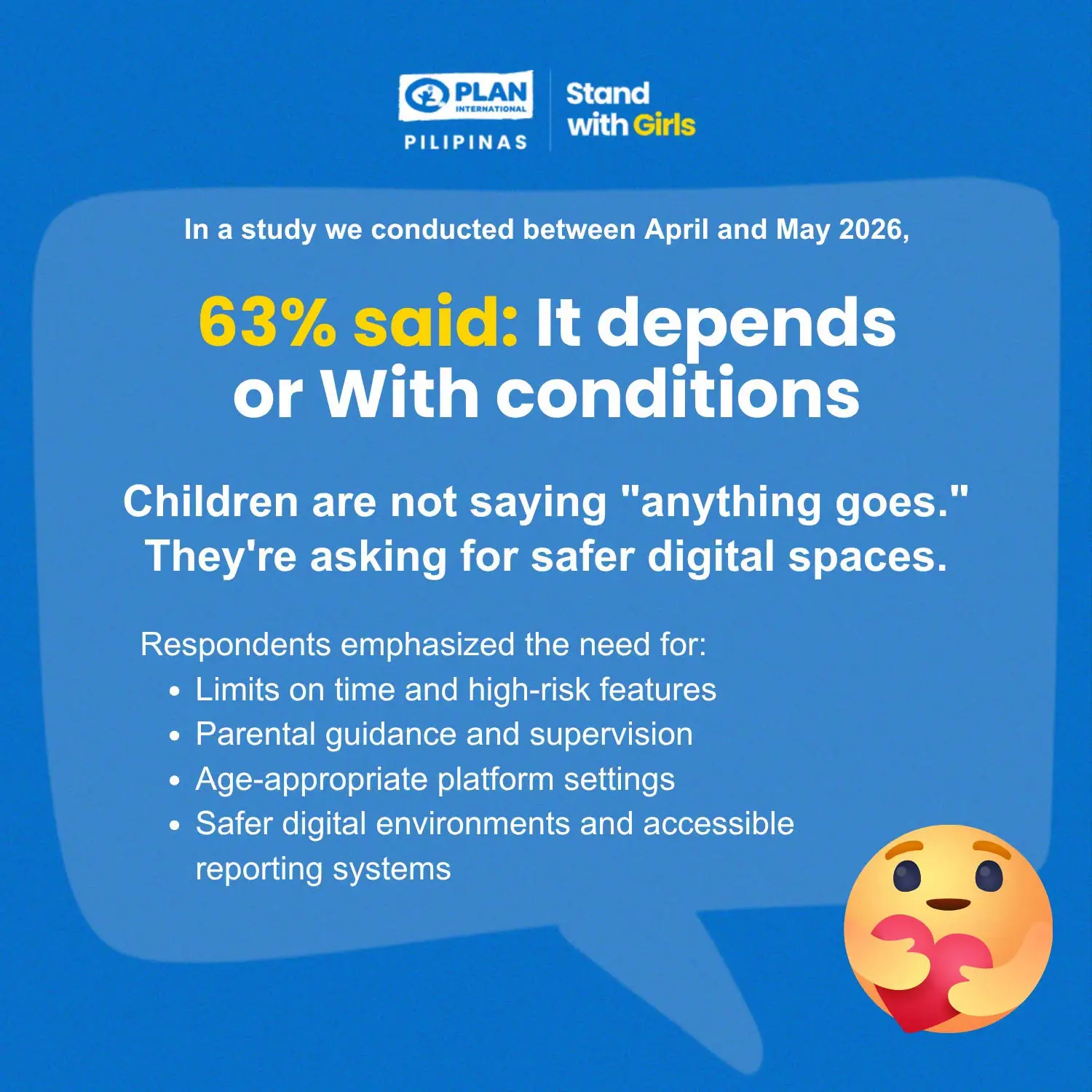
The organization’s consultation collected online-survey responses from 164 participants and included a focus group discussion with 13 members of its Youth Advisory Group. In the 2026 consultation, 63% favored access that “depends” or comes “with conditions,” while 29% supported an outright ban and 7% opposed a ban entirely.
Plan International Pilipinas said the conditional-access position reflects calls for protections as well as support in developing the skills needed to navigate online spaces responsibly. The organization framed the findings as a case for safeguards rather than unrestricted access.
Digital platforms are part of everyday use
The consultation is consistent with Plan International Pilipinas’ earlier Landscape Assessment of Online Platforms Used by Children and Young People in Selected Regions of the Philippines. That mixed-method assessment reached 590 participants: 494 online-survey respondents, 80 focus group discussion participants and 16 key informants from selected areas across the country.
According to the organization, communication was the leading reason young people used online platforms, followed by education and learning, leisure, and stress reduction. Respondents said they use digital spaces to keep in touch with family and friends, join communities, share updates, access information, learn skills and participate in online classes.
For respondents aged 15 to 17, social media and messaging platforms were frequently used for communication, education and leisure. The assessment said this group showed greater independence in selecting and using applications, while also seeking content filters suited to their age, better privacy and reporting mechanisms, safer platform design, parental guidance and digital-literacy support.

That combination is central to the young Filipinos online safety position described by Plan International Pilipinas. Its studies identify exposure to inappropriate content, cyberbullying, scams, privacy concerns, online exploitation and excessive use as risks respondents associate with online spaces. The respondents also called for stronger action from online platforms and government, including more effective safeguards and accountability for harmful content and unsafe interactions.
“Our ultimate goal here is not to remove teens from the digital environment, but to equip them with the necessary practical skills, so they can safely navigate the online environment safely, critically, and responsibly,” said Sheila Estabillo, Project Manager of Plan International Pilipinas.
Perceptions of platforms and shared responsibilities
Among respondents in the earlier landscape assessment, TikTok ranked highest among social media applications perceived as child-friendly, at 40.7%. Facebook followed at 32.2%, then Instagram at 16.1% and Snapchat at 11%. Plan International Pilipinas said the report also identified safety gaps across digital platforms and emphasized stronger protections for children and young people.
The organization said online safety is a shared responsibility involving families, schools, government, communities, civil society and technology companies. Its assessment points to appropriate regulation, digital literacy, age-appropriate design, parental support, effective reporting mechanisms and platform accountability as elements of that approach.
For the Philippine discussion on social-media restrictions for minors, the reported young Filipinos online safety view is not presented as a choice between access and protection. Plan International Pilipinas said young people want meaningful protection from online harms while retaining digital spaces for education, communication, creativity and participation.