
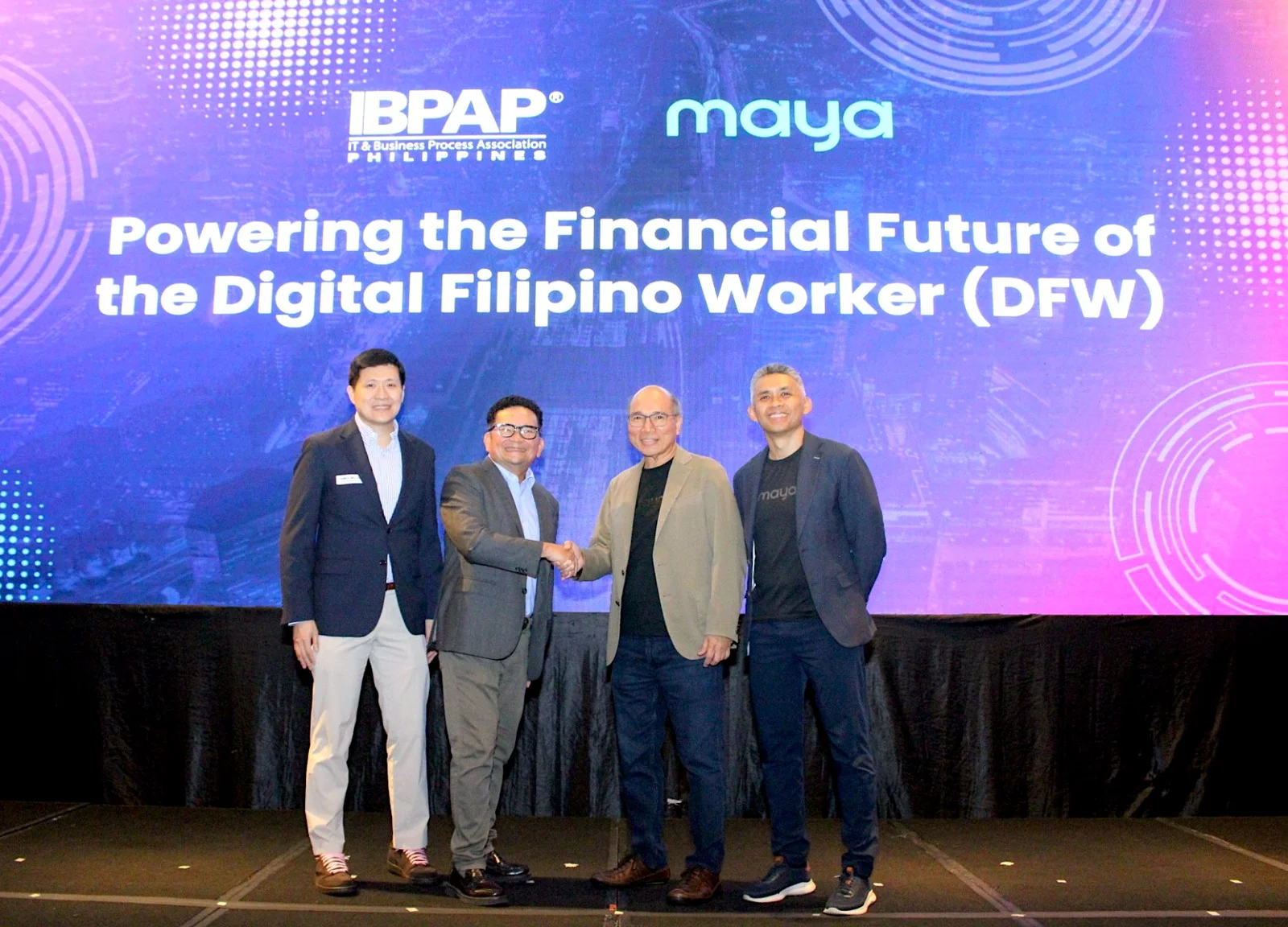
IT and Business Process Association of the Philippines (IBPAP) and Maya have announced a new initiative aimed at improving financial access for nearly 1.9 million Filipino digital workers in the country’s IT-BPM industry.
The program focuses on expanding access to savings products, credit cards, and formal banking services for employees across the sector. The announcement also coincides with Maya’s formal induction into IBPAP, signaling closer collaboration between the digital financial services platform and the IT-BPM industry.
The partnership reflects growing efforts to strengthen financial inclusion for workers in one of the Philippines’ largest economic sectors.
Addressing Financial Access Gaps in the IT-BPM Workforce
The Philippine IT-BPM industry plays a major role in the national economy. According to IBPAP, the sector:
- Contributes about 8% of the country’s GDP
- Generates over $40 billion in annual revenue
- Employs a largely young and digitally skilled workforce
Despite stable income streams, many employees in the sector still face challenges accessing traditional financial services.
A key barrier is the lack of formal credit history, which often limits eligibility for structured financial products such as credit cards. Traditional banking models tend to rely on legacy underwriting systems that may not fully reflect the earning capacity of younger, digitally native workers.


Promoting Savings and Responsible Credit
Under the new initiative, IBPAP and Maya aim to provide workers with access to structured financial tools designed to support long-term financial health.
The program focuses on:
- Savings products that encourage financial discipline
- Responsibly issued credit cards for qualified employees
- Digital banking services designed for everyday financial management
Rather than encouraging increased borrowing, the initiative emphasizes responsible credit usage to help workers build formal financial histories and reduce reliance on informal lending channels.
This approach aligns with broader financial inclusion efforts in the Philippines, where access to formal financial services remains uneven across different workforce segments.
Supporting Financial Stability in a Growing Sector
The IT-BPM workforce is composed largely of professionals under 35, making it one of the most economically active demographics in the country.
Improving access to financial tools such as savings accounts and credit products can help workers build stronger financial foundations, including the ability to qualify for housing loans, insurance products, and other long-term financial services.
The initiative also highlights the role of financial access in maintaining workforce stability and retention in an industry that operates around the clock and serves global clients.
Digital Finance and Payroll Innovation
Beyond individual financial tools, the partnership will also explore ways to modernize financial systems used by IT-BPM companies.
Potential areas of collaboration include:
- Digital payroll systems
- Automated disbursement solutions
- Streamlined reimbursement workflows
These improvements aim to reduce administrative overhead for large employers while improving payment efficiency for employees.

The initiative was reaffirmed in the presence of representatives from the Bangko Sentral ng Pilipinas, highlighting alignment with national priorities related to financial inclusion, responsible credit expansion, and digital transformation.
Expanding Digital Financial Services in the Philippines
Maya has been expanding its role in the Philippine financial ecosystem through digital banking services, merchant payment infrastructure, and financial health tools designed for consumers and businesses.
Through the partnership with IBPAP, the company aims to extend these services to a workforce that is digitally savvy but often underserved by traditional financial institutions.
By combining digital banking platforms, alternative data analytics, and AI-driven underwriting, the initiative seeks to responsibly broaden access to financial services while supporting the long-term financial health of Filipino digital workers.