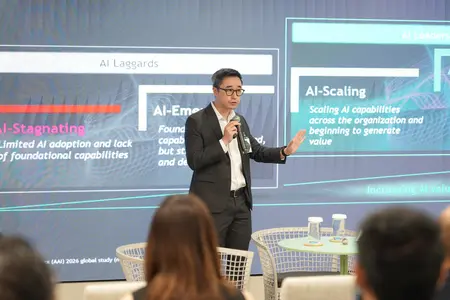
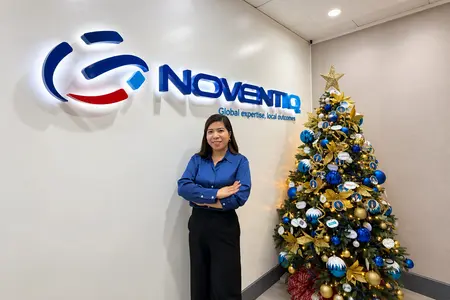
Noventiq Philippines has outlined an enterprise AI adoption strategy for enterprises seeking to move from AI adoption to measurable business value. Lilibeth Tumbali, General Manager of Noventiq Philippines, says the process should begin with business needs rather than technology alone, with clear goals, employee involvement and accountability guiding the rollout.
This enterprise AI adoption strategy is relevant to organizations assessing where AI can help people work better, serve customers well and deliver results they can measure. Noventiq connects the framework to its work in digital transformation and cybersecurity. Together, the six steps describe an enterprise AI adoption strategy that starts with business needs and extends through rollout and expansion.

1. Make AI adoption a business decision
Tumbali says businesses should assess their current status and identify areas for growth before deciding where to use AI. The goal is not to follow a trend, but to address a practical business need.
“Before we ask what AI can do, we need to be clear about what the business needs to do better,” says Tumbali. She adds that meaningful AI adoption starts with a real business need and a practical change that helps employees work better and serve customers well.
This assessment includes identifying which tasks need to change, what information employees need to work more efficiently, and where decisions are best handled by people.
2. Put safeguards into the operating plan
Once a business decides to incorporate AI, Tumbali recommends setting clear boundaries for its use. Leaders need to determine what information the technology can access, what actions it can take, and when employees must step in.

Businesses should also consider how privacy will be protected and who is responsible for keeping the system working as intended. These decisions, according to Tumbali, should be part of the plan from the start.
3. Define the relationship between people and AI
The framework keeps human responsibility at the center of AI use. Businesses need to specify which tasks are suited to AI and which must remain with employees.
“Giving an AI agent a task does not mean handing over our responsibility as leaders,” says Tumbali. She says employees need the skills, confidence and authority to guide AI, question its output and intervene when needed.
Training, clear escalation routes and the ability to identify inconsistencies or inefficiencies are also part of this working relationship.
4. Choose a practical area for change
Tumbali recommends starting with a problem people recognize, such as a customer needing an immediate answer, an employee repeating the same task or a team struggling to test an idea. Businesses should choose one problem and make the improvement visible in day-to-day work.
5. Scale value deliberately
Before expanding AI’s use, businesses should record how a specific workflow performs and then track changes after implementation. Depending on the task, measures could include turnaround time, service quality, cost per transaction or employee satisfaction.
“I would rather see one workflow deliver a measurable improvement than several pilots with no clear next step,” says Tumbali. She recommends assigning ownership and allowing evidence to guide expansion.

6. Translate global expertise into local outcomes
Noventiq says it brings use cases and best practices from other markets to the Philippines and adapts them to local needs. Tumbali also says the company equips its local sales, presales and delivery teams with global expertise to deliver projects that meet global quality standards.
For business leaders in the Philippines, the framework emphasizes assessing organizational readiness and using a phased rollout plan. Further information from Noventiq Philippines is available at noventiq.ph.