
Google AI Tools Open Frontiers for SEA Wildlife Conservation
As biodiversity loss accelerates across Southeast Asia, Google is expanding the role of artificial intelligence in wildlife conservation, offering new tools that could help protect endangered species in the Philippines and neighboring countries.
Through a partnership with the Vertebrate Genomes Project, Google is providing advanced AI-powered genomics tools and funding to support the sequencing of threatened animals. The effort focuses on preserving genetic diversity—an increasingly urgent challenge for species facing habitat loss, climate change, and population decline.
Using AI to Preserve Genetic Diversity
Scientists estimate that up to one million species worldwide are at risk of extinction. One of the biggest hurdles in conservation is the lack of complete genetic data. Such hurdle limits breeding programs, reintroduction efforts, and long-term species management.
Google is addressing this gap by deploying AI tools such as DeepVariant, DeepConsensus, and DeepPolisher, which significantly improve the speed and accuracy of genome sequencing. These technologies allow researchers to assemble what scientists describe as a species’ “biological instruction manual,” providing a clearer understanding of genetic health, adaptability, and survival risks.
What once took more than a decade and billions of dollars—such as sequencing the first human genome—can now be done in days at a fraction of the cost. AI corrects sequencing errors and refines raw data, ensuring that genetic maps are accurate enough to guide real-world conservation decisions.
Relevance to Southeast Asia
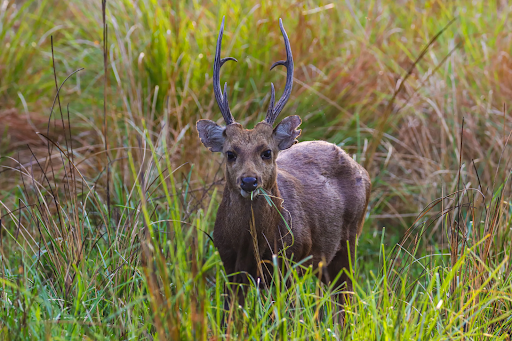
The initiative has already successfully sequenced 13 endangered species, several of which are native to Southeast Asia. These include the elongated tortoise, a critically endangered reptile targeted by captive breeding and reintroduction programs. Another is the hog deer, which has suffered severe population decline and genetic erosion across South and Southeast Asia. Lastly is the Eld’s deer, an endangered species that depends on carefully managed conservation strategies to survive.
The hog deer, once widespread across countries such as India, Myanmar, Thailand, and parts of Southeast Asia, now faces shrinking habitats and declining genetic diversity. Its inclusion in the project highlights how genomic tools can help guide recovery plans for species with fragmented populations.
Implications for Philippine Conservation
While no Philippine-endemic species have yet been announced as part of the initial sequencing batch, the expansion of the program could have major implications for local conservation. Google.org has awarded funding through its AI for Science initiative to The Rockefeller University. This enables the project to scale up genomic sequencing to 150 additional species.
For the Philippines—one of the world’s most important biodiversity hotspots—this opens the possibility of genomic preservation. These include species such as the Visayan spotted deer (Pilandok) and other endemic wildlife under threat. Open access to genomic data allows Filipino researchers, universities, and conservation groups to use global tools without the barrier of high sequencing costs.
Open Data for Global Impact
Google said all genomic data generated through the project will be made freely available to the scientific community. According to Google Genomics leaders Lizzie Dorfman and Andrew Carroll, understanding a species’ genome is critical to preserving genetic diversity and preventing irreversible population loss.
By combining AI, open data, and international research collaboration, Google’s conservation initiative demonstrates how technology can play a practical role in protecting wildlife. This is crucial in regions like Southeast Asia, where biodiversity is rich but increasingly vulnerable.