

Bank of the Philippine Islands is urging Filipinos to stay vigilant against online scams as Holy Week coincides with increased digital activity and financial transactions.
The period, which also overlaps with April Fool’s Day, highlights how cybercriminals take advantage of heightened emotions, urgency, and generosity—especially as more users send money, donate, and transact online.
Scammers Use More Sophisticated and Emotional Tactics
Financial scams are no longer easy to spot. Many now closely mimic legitimate messages, institutions, and even personal contacts, making them harder to distinguish from real transactions.
These schemes often rely on urgency and emotional triggers, pushing users to act quickly without verifying the source. As digital banking and e-wallet usage grow, these tactics are becoming more targeted and convincing.
Common Scam Types Still Target Users
Some of the most common threats include phishing messages that request sensitive details, fraudulent payment links that mimic legitimate checkout pages, impersonation scams involving fake identities, and donation drives that exploit goodwill during religious observances.
These approaches continue to evolve, often combining multiple tactics to appear more credible and persuasive.
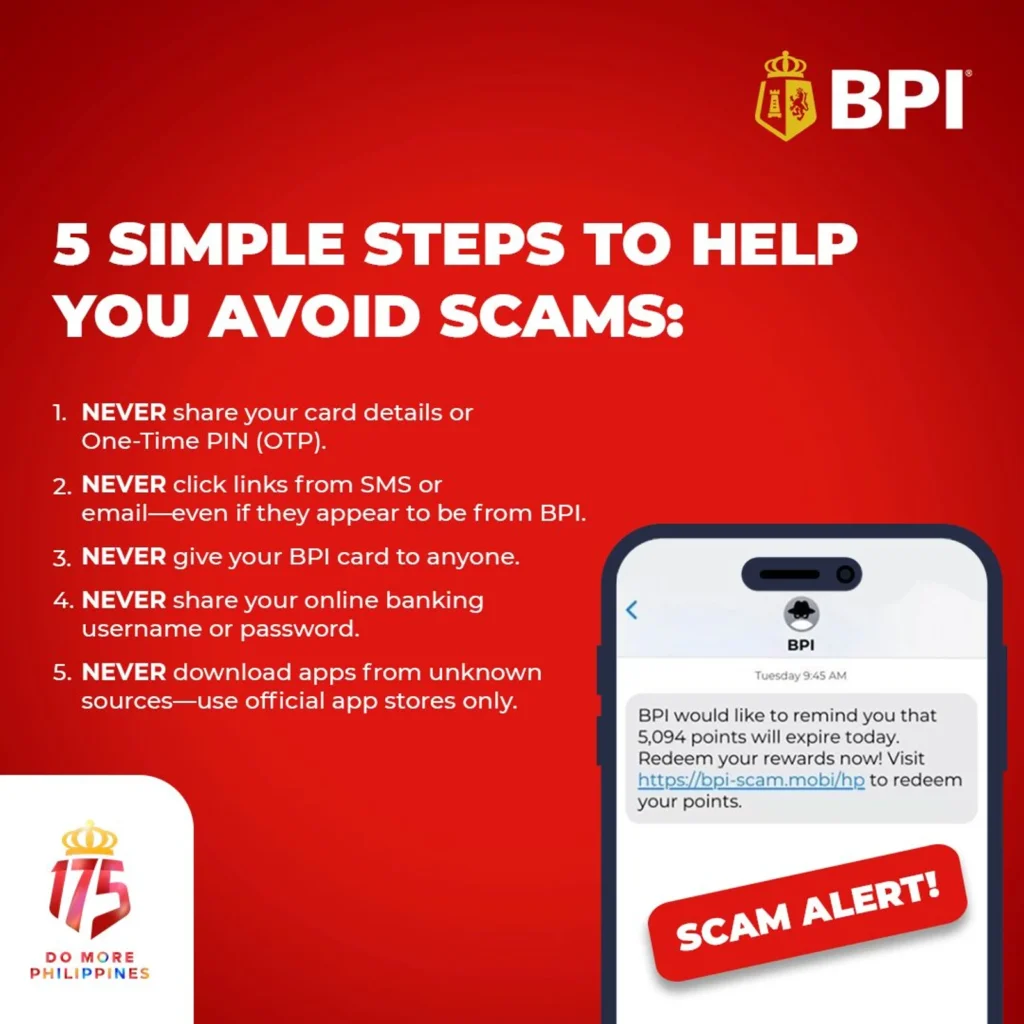
Simple Habits Can Prevent Financial Loss
BPI emphasizes that avoiding scams often comes down to consistent digital habits. Users should never share sensitive details such as card numbers, OTPs, or passwords, and should avoid clicking links from unknown or unsolicited messages.
It is also important to download apps only from official platforms and verify any financial request—especially those that create urgency or pressure immediate action.
Why Awareness Matters More During Peak Periods
Holiday periods like Holy Week tend to drive higher online activity, making them prime opportunities for cybercriminals. As more Filipinos rely on digital platforms for payments and communication, awareness becomes a critical layer of protection.
For consumers, practicing caution and verification helps prevent financial loss. For institutions, it reinforces the need to continuously educate users as threats evolve alongside digital adoption.