
Lenovo Report Warns AI Cybercrime Outpaces Current Defenses
Lenovo Report Warns AI Cybercrime Outpaces Current Defenses
The Security Gap No One Can Ignore
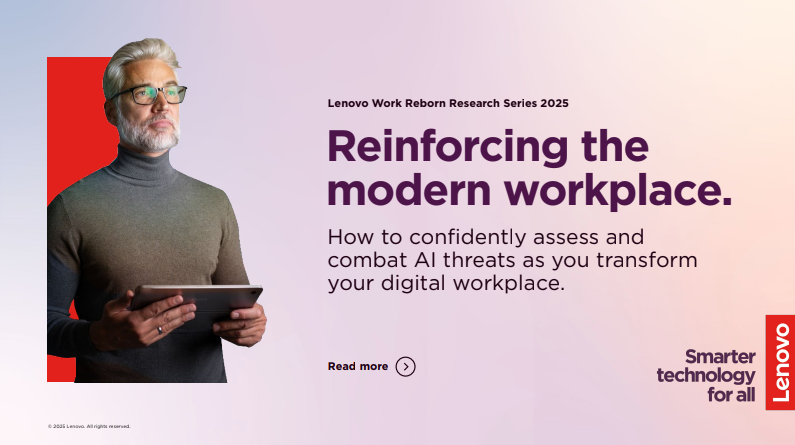
Lenovo’s latest Work Reborn report paints a sobering picture of the modern workplace. According to the study, 65% of IT leaders admit their defenses can’t withstand AI-driven cyberattacks, and only 31% feel confident about their ability to respond effectively. That’s not just a gap—it’s a canyon. Lenovo Report Warns AI Cybercrime Outpaces Current Defenses
The irony is that while AI is driving efficiency and innovation across industries, it’s also arming cybercriminals with tools that are faster, smarter, and harder to detect. Traditional defenses—firewalls, static antivirus, and signature-based detection—simply weren’t built for adversaries that can learn, adapt, and mutate in real time.

I’ve covered cybersecurity for years, and this is the first time I’ve seen IT leaders openly admit they’re outmatched. It’s a rare moment of honesty in an industry that usually prides itself on bravado. But honesty is the first step toward resilience.
The New Breed of AI Threats
Generative AI has supercharged the cybercriminal playbook. Lenovo’s report highlights three major categories of concern:
- AI-powered external threats – Think polymorphic malware that rewrites itself to avoid detection, phishing campaigns that sound eerily human, and deepfake impersonations that can fool even seasoned professionals.
- Insider risks – 70% of IT leaders see employee misuse of AI as a major vulnerability. Add to that the rise of autonomous AI agents, and suddenly you’ve got a new class of insider threat that most organizations aren’t prepared to manage.
- Protection of AI itself – Models, training data, and prompts are now high-value targets. If attackers can manipulate the very systems we rely on for decision-making, the consequences could be catastrophic.
This isn’t fearmongering—it’s reality. AI threats don’t just knock on the front door; they slip through the cracks, mimic legitimate behavior, and evolve faster than most defenses can keep up.
Fighting AI With AI
Rakshit Ghura, Lenovo’s VP & GM of Digital Workplace Solutions, summed it up perfectly: “AI has changed the balance of power in cybersecurity. To keep up, organizations need intelligence that adapts as fast as the threats. That means fighting AI with AI.”
Lenovo’s approach is to embed AI-native defenses directly into the digital workplace. Instead of relying solely on centralized security operations centers, Lenovo extends protection to every layer—from endpoints to cloud infrastructure.
This includes AI PCs that act as self-defending assets. By embedding intelligence at the device level, Lenovo ensures that laptops, desktops, and servers aren’t just endpoints—they’re active participants in the defense strategy.
For readers, this means your next work-issued laptop might not just run your spreadsheets—it might also be quietly analyzing network behavior, spotting anomalies, and shutting down threats before they spread.
From Reactive to Resilient
The shift Lenovo is advocating for is clear: move from reactive defenses to resilient systems. That means embedding AI into every layer of security, not just bolting it on as an afterthought.
Through its Care of One™ platform and ThinkShield Security Services, Lenovo is delivering AI-powered protection that scales across endpoints, applications, and data. The goal isn’t just to detect threats faster—it’s to adapt in real time, closing the gap between attack and response.
And the results are compelling. Lenovo’s Cyber Resiliency as a Service (CRaaS) has already shown 99.5% threat detection, response times under 30 minutes, and 20% cost savings in the first year of deployment. Delivered via subscription, CRaaS makes enterprise-grade security accessible without ballooning budgets.
I’ve seen plenty of “as-a-service” offerings that overpromise and underdeliver. CRaaS feels different because it’s backed by Lenovo’s scale and validated by early results.
Recognition and Reliability
Lenovo’s commitment to cybersecurity isn’t just marketing—it’s being recognized across the industry. At the 2025 Fortress Cybersecurity Awards, Lenovo earned honors in three categories:
- Cybersecurity Leaders – Recognizing Lenovo’s Zero Trust Architecture.
- Supply Chain Assurance – Protecting device integrity at scale, with Meta citing ThinkShield as a critical trust booster.
- Cloud Security – For Lenovo’s Cyber Resiliency as a Service.
On top of that, Lenovo’s ThinkSystem x86 servers have ranked #1 in uptime for 11 consecutive years, according to ITIC’s Global Server Hardware Reliability Report. That kind of consistency matters when your defenses depend on infrastructure that can’t afford downtime.
AI Security as a Growth Engine
Here’s the twist: securing AI-enabled workplaces isn’t just about defense. It’s also about growth. Lenovo’s report finds that organizations with strong AI security foundations unlock higher productivity, lower costs, and faster adoption of AI-powered workplace solutions.
In other words, security isn’t just a shield—it’s a springboard. Companies that trust their defenses are more willing to experiment, innovate, and deploy AI at scale. Those that don’t? They’ll hesitate, fall behind, and eventually lose their competitive edge.
As someone who’s seen businesses stall because of security fears, I can’t stress this enough: resilience breeds confidence, and confidence fuels innovation.
My Take: Why This Matters
I’ve always believed that cybersecurity is less about technology and more about trust. If employees don’t trust their systems, they won’t use them to their full potential. If customers don’t trust your brand, they won’t share their data.
Lenovo’s research shows that trust is eroding. Two-thirds of IT leaders admit they’re not ready for AI-driven threats. That’s alarming, but it’s also an opportunity. By embedding AI into defenses, Lenovo is helping organizations rebuild that trust—one endpoint, one data stream, one decision at a time.
For readers, the benefit is clear. Whether you’re running a startup, managing IT for a mid-sized company, or leading security for a global enterprise, the message is the same: traditional defenses won’t cut it anymore. You need AI that can think, adapt, and fight back.
And let’s be honest—if your antivirus still brags about “last updated yesterday,” while attackers are rewriting malware in seconds, you’re not defending. You’re just delaying the inevitable.
As AI becomes the fabric of business, Lenovo is committed to building workplaces that are not only more protected, but also intelligent, adaptive, and ready for what comes next. See where enterprise defenses fall short against AI-driven threats and how Lenovo helps close the gap. Download the full Reinforcing the Modern Workplace report for practical steps enterprises can take to outpace AI threats.
