
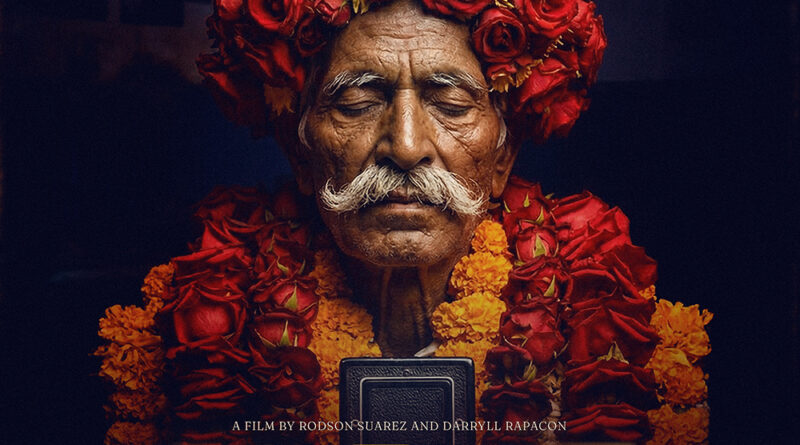
Filipino film ‘Portrait No. 72’ makes global finals at first AI Film Award
Filipino film ‘Portrait No. 72’ makes global finals at first AI Film Award
Filipino creativity has landed on the global AI filmmaking stage after Portrait No. 72, a locally made AI-assisted short film, was named a finalist in the inaugural AI Film Award held in Dubai.
The film, created by Filipino creatives Rodson Verr Suarez and Darryll Rapacon, placed among only five finalists worldwide. It stood out from more than 3,500 entries submitted from across different countries, marking a major milestone for Philippine representation in emerging AI-driven storytelling.
A Filipino story told with AI as a collaborator
Running just under ten minutes, Portrait No. 72 explores how generative AI reshapes the way stories are told. The competition required filmmakers to integrate AI throughout the creative process, but Suarez and Rapacon say the technology never replaced human direction.

Instead, AI served as a collaborator. It helped translate an ambitious concept into a finished film that would normally demand far more time, manpower, and budget.
Both creators balanced full-time jobs while working on the project. By using AI tools for production-heavy tasks, they focused on story, emotion, and artistic intent—elements they believe remain deeply human.
“When we were writing the film, we wanted to answer one question: can an AI film make you feel emotions?” Rapacon said. “With Portrait No. 72, we proved that it can. People felt something. It wasn’t just another AI clip online—it had a story and emotions.”
Rapacon added that the writing process was shaped by personal loss, as Suarez mourned his grandmother while Rapacon grieved his mother during production.
‘A film made with AI, not an AI film’
Suarez emphasized that the distinction matters, especially for creatives navigating new technology.
“Our mindset was simple,” he said. “This isn’t an AI film. It’s a film made with AI. We are still directing the story. AI is just a new storytelling tool, and creatives should be open to it.”
Google Philippines welcomed the film’s global recognition, calling it proof of how Filipino creativity thrives when paired with advanced tools.
“Congratulations to Rodson and Darryll for creating such a compelling short film in collaboration with Google AI,” said Mervin Wenke, Head of Communications for Google Philippines. “Their achievement highlights world-class Filipino talent and what’s possible when innovative storytellers gain access to powerful technology.”
Wenke added that Filipinos continue to stand out for how quickly they experiment with and master emerging tools, pushing creative boundaries beyond traditional formats.
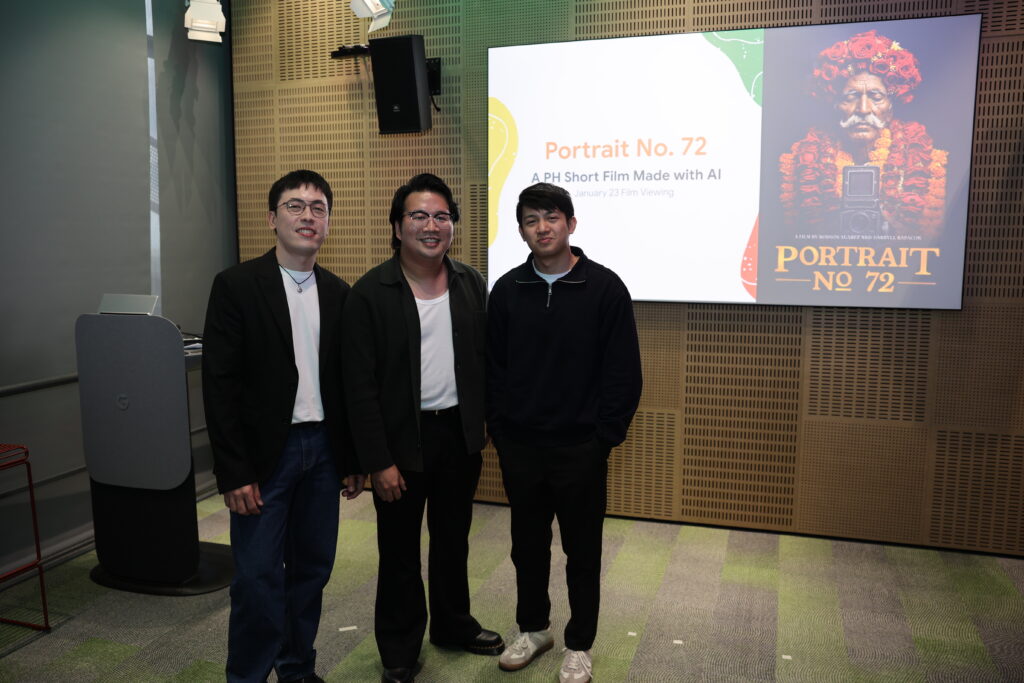
AI tools powering the creative process
Portrait No. 72 was created using Google AI tools designed to support professional storytelling workflows. The filmmakers used Veo to generate cinematic-quality video and establish the film’s mood and visual consistency.
They relied on Flow to fine-tune scene dynamics and emotional expression, ensuring characters conveyed empathy and nuance. Gemini supported early-stage development, helping shape storyboards, character design, and the overall visual direction.
Together, these tools enabled the creators to move from concept to screen with greater creative control, despite limited resources.
Transparency and responsible AI storytelling
As AI-generated content becomes more common, the team behind Portrait No. 72 stressed the importance of transparency and responsibility. They see AI as a way to expand access, not replace creative voices.
The film’s global recognition places the Philippines at the center of conversations around ethical and innovative AI filmmaking. For Suarez and Rapacon, reaching the finals proves that aspiring creatives—from students to professionals—can now bring bold ideas to life without traditional barriers.
By combining human storytelling with emerging technology, Portrait No. 72 positions Filipino creators at the forefront of the next chapter in global filmmaking.